
Used LED Display Screens: Complete Buying Guide for B2B Buyers

Introduction
Buying used LED display screens can reduce project costs, shorten delivery time, and make large-format LED video walls more affordable for budget-sensitive projects. For rental companies, advertising operators, system integrators, schools, churches, retail stores, and event organizers, a second-hand LED display can be a practical alternative to a new LED screen.
However, the used LED display market also carries technical risks. A screen may look acceptable during a short lighting test but still have hidden problems, such as brightness decay, aging power supplies, repaired LED modules, mixed module batches, incomplete configuration files, or control system compatibility issues.
For B2B buyers, the key question is not simply whether a used LED screen can light up. The real question is whether the screen still has enough remaining service life, stable performance, matching components, available spare parts, and reliable technical support.
This guide explains what used LED display screens are, how they work, where they are commonly used, what advantages and limitations they offer, and how to inspect and choose a suitable second-hand LED display system before purchase.
What Is a Used LED Display Screen?
A used LED display screen is a pre-owned LED video display system that has already been installed, operated, removed, refurbished, resold, or reconfigured for another project. It may also be called a second-hand LED display, used LED screen, used LED video wall, pre-owned LED display, or refurbished LED display screen.
A used LED display may come from many sources, including:
Rental staging companies
Retail advertising screens
Outdoor billboard upgrades
Exhibition halls
Corporate meeting rooms
Stadium or sports venue renovation projects
Shopping mall media networks
Factory overstock
Project cancellations
Refurbished LED module suppliers
LED display distributors and system integrators
A typical used LED display system may include:
Component | Function |
LED modules | Display image content through RGB LED pixels |
Cabinets | Hold LED modules, power supplies, receiving cards, and internal cables |
Power supplies | Convert AC power into DC power for LED modules and electronics |
Receiving cards | Receive image data from the sending card and control the LED modules |
Sending card | Sends processed display data to receiving cards |
Video processor | Handles signal scaling, switching, splicing, and conversion |
Control software | Configures resolution, mapping, brightness, calibration, and screen parameters |
Data cables | Transmit control signals between cabinets and control devices |
Power cables | Distribute electrical power to LED cabinets |
Mounting structure | Supports indoor, outdoor, fixed, or rental installation |
A used LED display screen should not be judged only by whether the front image looks normal. A professional evaluation should also include the rear electronic structure, power system, control system, cabinet condition, configuration files, and spare parts availability.
Where Does a Used LED Display Fit in an LED Display System?
In an LED display project, a used LED display screen performs the same basic role as a new LED screen. It is the visual output terminal of the LED display system.
Its functional position can be understood from three levels:
Display terminal
System node in the LED control chain
Project asset with remaining service life
Display Terminal
The LED display screen converts digital video, images, text, animations, or live camera signals into visible light through red, green, and blue LED pixels.
Whether the screen is new or used, it should deliver:
Adequate brightness
Acceptable contrast
Stable refresh rate
Correct grayscale performance
Uniform color output
Reliable signal transmission
Safe electrical operation
If the screen cannot meet these basic performance requirements, a low purchase price may not create real project value.
System Node in the LED Control Chain
A used LED screen is not an isolated product. It works inside a broader LED control system, usually involving:
text
The screen must remain compatible with the sending card, receiving card, control software, cabinet mapping, resolution settings, scan mode, and module configuration files.
For example, a used screen originally configured with a NovaStar receiving card may require matching NovaStar sending equipment and control software. A Colorlight, Linsn, Huidu, or other control system may have different configuration files, cabinet parameters, and control logic.
If the control system is ignored, the used LED display may power on but fail to display correctly. Common problems include:
Wrong cabinet mapping
Image distortion
Incorrect color order
Partial screen blackout
Communication failure
Abnormal refresh rate
Incorrect scan configuration
Brightness control failure
For this reason, receiving card models, sending card models, control software versions, and configuration files should be confirmed before purchase.
Project Asset with Remaining Service Life
Unlike a new LED display, a used LED display has already consumed part of its lifecycle. Its value depends not only on specifications but also on remaining usable life.
Important lifecycle factors include:
LED lamp bead aging
Power supply fatigue
Heat exposure history
Outdoor UV exposure
Moisture or water ingress
Transportation frequency
Repair history
Total operating time
Cabinet deformation
Firmware and spare part availability
A used LED display should therefore be evaluated as a complete system asset, not just as a low-cost display surface.
How Do Used LED Display Screens Work?
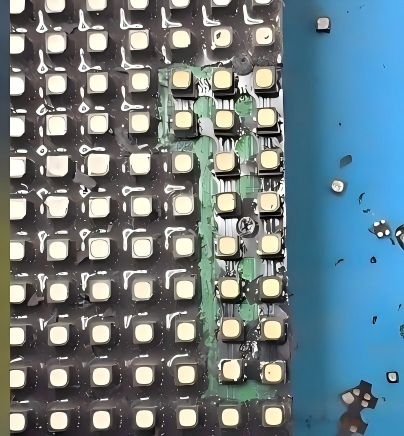
Used LED display module close-up: pixel layout and LED lamp condition should be checked before buying a second-hand LED screen.
To choose used LED display screens correctly, buyers should understand how the screen works at a system level.
Basic Display Principle
An LED display is composed of many small LED pixels. Each pixel usually includes red, green, and blue LED chips. By controlling the brightness of each color channel, the display generates full-color images.
For example:
Red and green create yellow.
Red and blue create magenta.
Green and blue create cyan.
Red, green, and blue together create white.
Different brightness ratios create a wide range of colors.
The control system sends image data to the LED modules. Driver ICs on the PCB control the current and switching timing of each LED channel, allowing the screen to display videos, images, text, graphics, and animations.
Signal Chain
A typical LED video wall signal chain works as follows:
Input source
The source may be a computer, media player, camera, HDMI device, SDI device, advertising player, or cloud-based playback terminal.
Video processor
The video processor scales, crops, switches, splices, or converts the input signal. For large LED video walls, it helps match the source resolution to the physical LED screen resolution.
Sending card
The sending card converts the processed video data into a format that LED receiving cards can understand. It transmits display data through Ethernet cable or optical fiber.
Receiving card
The receiving card is installed inside the LED cabinet. It receives data from the sending card, distributes image data to LED modules, and controls parameters such as brightness, grayscale, refresh rate, and mapping.
Hub board and LED module
The hub board connects the receiving card to multiple LED modules. The LED module contains LED lamps, driver ICs, PCB traces, masks, and connectors.
Power supply
The power supply converts AC input into stable DC output, commonly 5V or other required voltages depending on the LED module design.
Displayed image
The modules illuminate according to the control signal, forming the final visible image.
Power Supply Role
In used LED screens, the power supply is one of the most important hidden components.
Even if the LED modules look normal during a short test, aging power supplies may cause:
Random black modules
Flickering
Voltage instability
Overheating
Burned connectors
Short circuits
Damage to LED modules
System restart during high-brightness operation
Because many used LED screens have unknown power-on hours, power supplies should be inspected carefully. For many commercial refurbishment projects, replacing old power supplies with new branded units is a practical way to reduce maintenance risk.
Module Aging and Brightness Decay
LED lamp beads lose brightness over time. This process is irreversible. Even if a screen is stored and not used for a long period, electronic components may still age due to humidity, oxidation, thermal cycling, and material degradation.
Typical signs of module aging include:
Reduced brightness
Uneven color blocks
Color temperature shift
Dead pixels
Dark pixels
Random flashing dots
Poor grayscale at low brightness
Inconsistent white balance
A screen used for 24/7 outdoor advertising usually has much heavier aging than a screen used occasionally for indoor events.
Repair Traces and System Stability
Many second-hand LED screens have been repaired before resale. Common repairs include:
Replacing LED lamps
Replacing driver ICs
Re-soldering damaged PCB areas
Repairing broken connectors
Replacing masks
Swapping receiving cards
Mixing modules from different batches
A repaired module is not always unusable, but large-scale manual repair may reduce long-term reliability. Hand-soldered LED lamps may have color inconsistency, weak solder joints, or poor thermal resistance. Repaired driver circuits may also become unstable under high temperature or long operation.
Therefore, buyers should inspect the rear side of LED modules instead of only watching the front display effect.
Main Components of a Used LED Display System
A used LED display system usually includes mechanical, electrical, and control components. Each component affects the final performance and reliability of the screen.
LED Modules
LED modules are the core display units. They contain the LED lamp beads, driver ICs, PCB boards, masks, and connectors.
When inspecting used LED modules, check:
Pixel pitch
Module resolution
LED lamp condition
Dead pixels or dark pixels
Color uniformity
PCB repair traces
Connector condition
Batch consistency
Mask damage or deformation
LED Cabinets
Cabinets hold modules, receiving cards, power supplies, and internal cables. They also determine installation flatness and structural safety.
Check the following:
Cabinet size
Cabinet material
Cabinet deformation
Flatness after assembly
Lock condition
Handle condition
Rust or corrosion
Door sealing
Waterproof rubber strips
Grounding points
Front or rear maintenance design
For rental used LED screens, cabinet collision damage and lock wear are especially important. For outdoor used LED screens, corrosion and waterproof sealing should be inspected carefully.
Power Supplies
Power supplies directly affect screen stability. Old or low-quality power supplies can cause unstable voltage, flickering, overheating, or module failure.
Check:
Brand and model
Output voltage and current
Production date
Physical condition
Fan condition if applicable
Connector oxidation
Burn marks
Cable aging
Voltage stability under load
If the power supplies are old, mixed, or from unknown brands, replacement should be considered before installation.
Receiving Cards and Sending Cards
Receiving cards and sending cards control the screen’s image data transmission. They are critical for compatibility and commissioning.
Ask the seller to provide:
Receiving card brand and model
Sending card brand and model
Control software name and version
Configuration file
Cabinet mapping file
Scan mode
Firmware version if available
Without these details, commissioning a used LED display may become difficult and time-consuming.
Video Processor
A video processor handles input signal conversion, scaling, switching, cropping, and splicing. For large LED video walls, it helps match content resolution to the physical display resolution.
When buying a used LED display, confirm whether the video processor is included. If not, make sure your existing processor supports the required resolution, input sources, and control system.
Cables and Connectors
Power cables, data cables, flat cables, and connectors are often overlooked, but they can cause frequent failures if damaged.
Check:
Data cable condition
Power cable condition
Flat cable wear
Connector oxidation
Loose terminals
Cable length and routing
Waterproof connectors for outdoor screens
Main Types of Used LED Display Screens
Used LED display screens can be classified by installation environment, pixel pitch, application type, maintenance method, and control mode.
Indoor Used LED Display Screens

Indoor used LED displays are designed for controlled environments with lower humidity, stable temperature, and less direct sunlight.
Common features include:
Lower brightness than outdoor screens
Finer pixel pitch options
Lightweight cabinet design
No strict waterproof requirement
Suitable for close viewing distances
Common applications include:
Conference rooms
Retail stores
Shopping malls
Showrooms
Control rooms
Studios
Exhibition booths
Auditoriums
Typical indoor pixel pitches include P1.2, P1.5, P1.8, P2, P2.5, P3, and P4.
For indoor fine-pitch used LED displays, color uniformity, dead pixels, cabinet flatness, and front maintenance design should be checked carefully.
Outdoor Used LED Display Screens
Outdoor used LED displays require higher brightness and stronger environmental protection.
Common features include:
High brightness for sunlight visibility
Waterproof cabinet and module design
UV resistance
Higher power consumption
Stronger structure
Better heat dissipation
Weather-resistant connectors
Common applications include:
Roadside billboards
Building facades
Sports venues
Public squares
Parking lots
Shopping streets
Outdoor advertising networks
Typical outdoor pixel pitches include P3, P4, P5, P6, P8, P10, and larger.
For outdoor second-hand LED screens, waterproof sealing, cabinet corrosion, rust, water ingress history, cooling performance, grounding, and lightning protection are especially important.
Fixed Installation Used LED Displays
Fixed installation LED displays are designed for long-term installation. They are often used in shops, malls, buildings, command centers, and outdoor billboards.
Advantages include:
Stable structure
Cleaner installation appearance
Suitable for long-term operation
Flexible screen size design
Risks in used condition include:
Long operating hours
Brightness decay
Aging power supplies
Outdoor weather damage
Limited spare modules
Used Rental LED Screens
Rental LED screens are designed for frequent assembly, transportation, and temporary use.
Common features include:
Fast-lock cabinet design
Lightweight aluminum cabinets
Front or rear maintenance
Quick installation
Stronger mechanical design for repeated setup
Stage-friendly cabinet structure
Common applications include:
Concerts
Exhibitions
Conferences
Product launches
Weddings
Touring events
Stage backgrounds
Risks in used condition include:
Cabinet collision damage
Loose connectors
Broken corner protectors
Frequent plug-in wear
Mixed modules from multiple batches
Scratched masks or damaged LEDs
For stage use, pay attention to cabinet locks, flatness, refresh rate, grayscale performance, and receiving card compatibility with the existing video processor.
Fine-Pitch Used LED Displays
Fine-pitch LED displays usually refer to indoor LED screens with smaller pixel pitches, such as P1.2, P1.5, P1.8, and P2.
They are commonly used in:
Boardrooms
Command centers
Control rooms
Broadcast studios
Corporate showrooms
High-end retail spaces
Fine-pitch used LED screens require stricter inspection because smaller pixels are more sensitive to damage, repair quality, and color inconsistency.
Important inspection points include:
Dead pixels
Dark pixels
Low-brightness grayscale
Color blocks
Module flatness
Batch consistency
Front maintenance reliability
Calibration data availability
For mission-critical environments, a new LED display may be safer than a heavily used fine-pitch LED screen.
Front-Maintenance and Rear-Maintenance Used LED Screens
Used LED screens may support front maintenance or rear maintenance.
Front maintenance means modules and components can be removed from the front side. This is useful for wall-mounted installations, conference rooms, retail stores, and sites with limited rear access.
Rear maintenance means service is performed from the back of the screen. This is common in outdoor billboards, rental screens, and large fixed installations.
Before buying, confirm that the maintenance method matches the installation site. A rear-maintenance screen may not be suitable for a wall-mounted meeting room if there is no service space behind the display.
Common Applications of Used LED Display Screens
Used LED display screens can be suitable for many B2B scenarios, especially where budget control is important and perfect visual uniformity is not required.
Retail Stores and Shopping Malls
Retail stores use LED screens for promotions, brand visuals, product launches, and window displays. A used indoor LED display may be practical when:
Viewing distance is moderate
Content is mainly advertising or motion graphics
Budget is limited
The store needs fast deployment
Ultra-fine pitch is not required
However, buyers should check brightness uniformity carefully, especially for screens placed near windows or bright lighting.
Stage Events and Rental Projects
Rental-style used LED panels are common for temporary events, concerts, product launches, weddings, exhibitions, and corporate shows.
They are suitable because:
The usage period is short
Viewing distance is usually longer
High refresh rate is useful for cameras
Cabinets are designed for quick installation
The screen can be reused across multiple events
For stage use, check cabinet locks, fast connectors, frame flatness, refresh rate, grayscale performance, and system compatibility.
Outdoor Advertising
Used outdoor LED displays may reduce investment for advertising operators. They can be considered for:
Roadside billboards
Building walls
Parking lots
Shopping street signage
Community information boards
Commercial plazas
Outdoor second-hand screens require stricter inspection than indoor screens. Check waterproof performance, cabinet corrosion, brightness decay, fans, ventilation, power supplies, grounding, and lightning protection.
Meeting Rooms and Corporate Spaces
Some companies consider used fine-pitch LED displays to replace projectors or LCD video walls.
Used indoor fine-pitch screens may work if:
The screen is from a reliable batch
Pixel pitch matches viewing distance
Color uniformity is acceptable
Front maintenance is supported
Control system is complete
Spare modules are available
For boardrooms, command centers, and broadcast rooms, the inspection standard should be higher because visual quality and stability are more important.
Schools, Churches, and Auditoriums
Schools, universities, churches, theaters, and auditoriums often need large-format displays but have limited budgets. Used LED screens can be a cost-effective choice for lecture halls, worship stages, and multipurpose rooms.
Important selection points include:
Easy content management
Safe installation
Stable brightness
Low maintenance workload
Reliable spare parts
Compatibility with HDMI or video processor input
Suitable viewing distance and pixel pitch
LED Display Resale and Integration Projects
For channel dealers and system integrators, used LED displays can become inventory for budget-sensitive customers. However, reselling used screens requires transparent grading, clear warranty terms, accurate specifications, and technical documentation.
A professional supplier should provide:
Real photos and videos
Test reports
Configuration files
Packing details
Spare parts list
Warranty scope
Clear grading standard
Technical support for installation and commissioning
Advantages of Buying Used LED Display Screens
Used LED display screens offer several practical advantages when selected carefully.
Lower Initial Cost
The most obvious advantage is lower purchase cost. Compared with new LED screens, used screens may reduce the initial investment significantly, depending on age, pixel pitch, brand, cabinet condition, and included accessories.
For projects with limited budgets, this can make LED display technology more accessible.
Faster Availability
Used screens are often available from existing inventory. This may shorten lead time compared with customized new screens, especially for urgent events, temporary installations, or replacement projects.
Suitable for Short-Term Projects
If the screen is needed for a short campaign, seasonal event, temporary store, exhibition booth, or short-term rental, a used LED display can be financially reasonable.
Lower Depreciation Pressure
A new LED display depreciates quickly after installation. A used screen has already absorbed part of that depreciation. For rental companies or advertising operators, this can help improve project cost control.
Practical for Non-Critical Visual Requirements
Not every application requires broadcast-grade color accuracy, ultra-fine pitch, or perfect image uniformity. For medium-distance advertising, stage backgrounds, public information displays, and temporary events, a used screen with acceptable condition can meet actual requirements.
Reuse of Existing LED Assets
Buying used LED screens supports equipment reuse. For some projects, reusing cabinets and modules can reduce waste, especially when the screen still has usable service life.
Risks and Limitations of Used LED Display Screens
The disadvantages of used LED displays are equally important. A low purchase price can become expensive if hidden problems are ignored.
Unknown Operating History
Many used screens do not have accurate operating records. Sellers may not know or may not disclose:
Original installation date
Daily operating hours
Brightness setting history
Outdoor exposure time
Repair records
Water damage history
Transportation frequency
Without this information, estimating remaining service life becomes difficult.
Aging Power Supplies
Power supplies are among the highest-risk components in used LED screens. Aging power supplies can cause black modules, flicking, system instability, overheating, and possible damage to nearby modules.
Replacing power supplies before installation is often recommended for commercial projects, especially when the power supply age or brand is unclear.
Repaired or Refurbished Modules
Some low-priced used LED screens contain repaired modules with replaced lamps or driver ICs. These modules may look normal at first but fail after weeks or months of operation.
Common failure signs include:
Dead pixels
Dark areas
Color blocks
Flickering lines
Partial image loss
High-temperature instability
Brightness and Color Inconsistency
Different module batches age differently. Even modules of the same model may show visible color differences after years of use.
This is especially problematic for:
Fine-pitch meeting rooms
Broadcast studios
Corporate showrooms
High-end retail stores
Control centers
Limited Warranty
Used screens often have shorter warranty terms than new products. Some sellers offer only basic testing or limited after-sales support.
Before purchase, buyers should confirm:
Warranty duration
Covered parts
Excluded failures
Service response time
Spare module availability
Whether labor cost is included
Who pays shipping costs
Compatibility Risks
A used LED screen may come without original configuration files, receiving card parameters, control software version, or cabinet mapping data. This can make installation difficult.
Compatibility should be checked before shipment, especially for receiving cards, sending cards, video processors, and control software.
Higher Maintenance Uncertainty
Even if the screen works during acceptance testing, older components may fail later. Buyers should budget for spare parts, replacement components, and technical support.
Used LED Display Screen vs New LED Display Screen
Choosing between a used LED display screen and a new LED display depends on budget, project duration, visual requirements, and risk tolerance.
Item | Used LED Display Screen | New LED Display Screen |
Initial cost | Lower | Higher |
Lead time | Usually faster if in stock | Longer if customized |
Warranty | Limited or shorter | Standard manufacturer warranty |
Brightness uniformity | May vary due to aging | More consistent |
Color consistency | Depends on batch and usage history | Better batch consistency |
Customization | Limited to available inventory | Flexible size, pitch, cabinet, and control system |
Spare parts | May be limited | Easier to match |
Configuration files | May be missing or incomplete | Usually complete |
Risk level | Higher if not inspected properly | Lower |
Best for | Temporary events, budget projects, medium-distance advertising | Long-term, high-end, mission-critical projects |
A used LED screen is usually more suitable for short-term events, temporary installations, rental inventory, budget advertising, schools, churches, and applications where perfect uniformity is not required.
A new LED display is usually better for fine-pitch meeting rooms, broadcast studios, control centers, luxury retail, and long-term outdoor advertising where stability, warranty, and image quality are critical.
How to Choose Used LED Display Screens
A professional selection process is the key to buying a used LED display screen safely.
Confirm Application Requirements
Before checking products, define the project requirements clearly:
Indoor or outdoor?
Fixed or rental?
Required screen size?
Viewing distance?
Pixel pitch?
Brightness requirement?
Refresh rate requirement?
Front or rear maintenance?
Synchronous or asynchronous control?
Temporary or long-term use?
Installation environment?
Expected daily operating hours?
The right used screen depends on the actual application, not only the lowest price.
Check Pixel Pitch and Resolution
Pixel pitch refers to the distance between the centers of two adjacent pixels. It directly affects viewing distance, resolution, and cost.
Typical reference:
Pixel Pitch | Typical Use |
P1.2–P1.8 | Fine-pitch indoor display, control room, boardroom |
P2–P2.5 | Meeting room, showroom, retail, studio |
P3–P4 | Indoor events, stage background, commercial display |
P5–P6 | Outdoor advertising, medium-distance viewing |
P8–P10 | Large outdoor billboard, long-distance viewing |
Make sure the final resolution matches content requirements and video processor capacity.
Verify Control System Compatibility
Ask the seller to provide:
Receiving card brand and model
Sending card brand and model
Control software name and version
Cabinet configuration file
Scan mode
Module resolution
Data cable routing diagram
Screen connection diagram
Firmware version if available
Common LED control system brands include NovaStar, Colorlight, Linsn, Huidu, Mooncell, Brompton, and Megapixel. Compatibility between receiving card, sending card, video processor, and software must be verified.
Inspect Power Supplies
Power supply inspection is critical.
Check:
Brand and model
Output voltage and current
Production date
Physical appearance
Fan condition if applicable
Connector oxidation
Burn marks
Cable aging
Voltage stability under load
If the power supplies are old, unknown, or low-quality, consider replacing them with new branded units before installation.
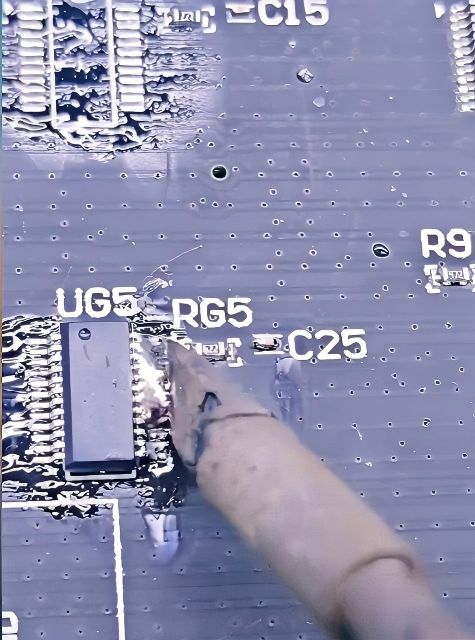
Inspect LED Modules from the Back
Do not rely only on the front display image. Ask for clear photos or videos of the rear PCB.
Look for:
Hand-soldered LED lamps
Replaced driver ICs
Burn marks
Broken PCB corners
Corrosion
Water stains
Excessive glue repair
Different PCB colors from mixed batches
Damaged connectors
A few minor repairs may be acceptable for temporary use, but large-scale repair marks are a warning sign.
Test Long-Term Operation
A short lighting test is not enough. Request an aging test before delivery.
Recommended test items include:
Full white screen
Red, green, blue, and black screens
Grayscale test
Gradient image test
Video playback test
High-brightness operation
Low-brightness operation
Signal interruption recovery
Power restart test
Continuous operation for several hours
During testing, check for flickering, black modules, abnormal heat, dead pixels, and communication loss.
Check Brightness and Color Uniformity
Ask the seller to show:
Full white image
Solid red, green, and blue images
Gradient images
Real video content
Low-brightness gray image
Uneven color may indicate mixed modules, aging lamp beads, or repaired modules.
Confirm Actual Age and Usage
Ask for:
Factory serial number
Production date
Original purchase record if available
Project removal record
Control system power-on hours if available
Module batch number
Cabinet label photos
As a general reference:
Screen Age | Practical Assessment |
Less than 1 year | Usually lower risk if not heavily used |
1–2 years | Often acceptable for budget projects |
2–3 years | Requires careful inspection and price negotiation |
3–4 years or more | Higher risk, especially for outdoor or 24/7 use |
5 years or more | Usually suitable only for very low-budget or temporary use |
Actual condition matters more than age alone. A two-year rental screen with heavy transport damage may be worse than a three-year indoor fixed screen used only occasionally.
Check Cabinet Condition
Inspect the mechanical structure:
Cabinet deformation
Flatness after assembly
Lock condition
Handle condition
Rust or corrosion
Door sealing
Waterproof rubber strips
Module magnet strength for front maintenance
Cable routing
Grounding points
Poor cabinet flatness can cause visible seams, shadows, and installation difficulty.
Verify Communication Method
Used LED screens may use:
CAT5e or CAT6 network cables
Optical fiber converters
HDMI-based controllers
4G or cloud players for advertising
Wi-Fi or LAN asynchronous controllers
For large outdoor screens or long-distance signal transmission, optical fiber may be required. Confirm the communication method before purchase.
Confirm Spare Parts
Always ask for spare parts, especially:
Spare LED modules
Spare power supplies
Spare receiving cards
Spare hub boards
Flat cables
Power cables
Module masks
Connectors
If the screen model is old, matching spare modules may be difficult to find later.
Evaluate Total Cost, Not Only Purchase Price
A used LED screen with a very low price may require additional costs:
New power supplies
Replacement receiving cards
New video processor
Cabinet repair
Module repair
Spare parts
Installation labor
Structure modification
Shipping and packing
Technical commissioning
Warranty service
For B2B procurement teams, the lowest quotation is not always the best choice. A professional purchase decision should compare the screen price, refurbishment cost, installation labor, spare parts, warranty coverage, and expected maintenance workload.
Used LED Display Screen Inspection Checklist
Before buying a used LED display screen, check the following items:
Inspection Item | What to Confirm |
Production date | Confirm cabinet labels, module labels, or original records |
Operating history | Ask about previous installation, daily working hours, and environment |
Pixel pitch | Make sure all modules have the same pitch |
Module batch | Avoid mixed batches if uniformity is important |
Brightness | Test full white image and compare brightness uniformity |
Color consistency | Test red, green, blue, gray, and video content |
Power supplies | Check brand, age, voltage stability, and heat condition |
Receiving cards | Confirm brand, model, firmware, and configuration files |
Sending card | Confirm compatibility with receiving cards and software |
Video processor | Check input support, output capacity, and scaling capability |
Cabinet condition | Check flatness, locks, handles, corrosion, and sealing |
Waterproofing | Essential for outdoor used LED displays |
Repair traces | Inspect rear PCB, solder joints, ICs, and connectors |
Spare parts | Confirm spare modules, cards, power supplies, and cables |
Warranty | Clarify coverage, duration, labor, shipping, and exclusions |
Packing | Confirm safe packaging for modules, cabinets, and accessories |
Technical support | Confirm installation guidance and remote commissioning support |
This checklist helps reduce procurement risk and makes supplier comparison easier.
Common Brands and Control Systems in the Used LED Display Market
The used LED display market includes a wide range of brands and configurations. Brand evaluation should remain practical and objective.
LED Display Manufacturers
Common LED display manufacturers in international and Chinese markets include companies that produce indoor, outdoor, rental, fine-pitch, and fixed-installation LED displays. Well-known manufacturers may offer better product consistency, documentation, and spare part availability.
However, when buying used LED screens, brand name alone is not enough. A recognized-brand screen that has been heavily used outdoors for five years may be less reliable than a smaller-brand screen used indoors for one year.
Buyers should evaluate both brand and condition.
LED Control System Brands
Common LED control system brands include:
NovaStar
Colorlight
Linsn
Huidu
Mooncell
Brompton
Megapixel
The control system brand affects compatibility, software configuration, refresh rate, grayscale performance, calibration, and maintenance convenience.
NovaStar and Colorlight systems are commonly seen in many commercial and rental LED projects. Huidu is often used in asynchronous advertising displays. Brompton and Megapixel are more common in high-end staging, XR, virtual production, and broadcast-related applications.
Power Supply Brands
Power supply quality has a direct impact on display stability. Buyers commonly look for established LED power supply brands or recognized industrial power supply suppliers.
When evaluating used screens, check whether the installed power supplies are original, replaced, mixed, or low-quality substitutes. Replacing aging power supplies with new units can be a practical maintenance investment.
Component Consistency Matters More Than the Logo
For used LED displays, the most important issue is not simply whether the product carries a famous logo. The key is whether the complete system is consistent:
Same LED module batch
Same pixel pitch
Same cabinet type
Same receiving card model
Same scan mode
Same power supply specification
Same control system
Same brightness and color calibration level
A mixed system is harder to maintain and more likely to show visual inconsistency.
When Is a Used LED Display Screen Worth Buying?
A used LED display screen may be worth buying when:
The screen is less than three years old.
The operating history is clear.
The modules come from the same batch.
The power supplies and receiving cards are in stable condition.
The seller provides test videos and rear-side module photos.
Spare modules, receiving cards, and power supplies are available.
The application does not require perfect color uniformity.
The total project cost is still much lower than buying new.
The control system is complete and compatible.
The seller provides clear warranty and technical support.
A used LED display may not be worth buying when:
The screen has serious repair traces.
The modules are mixed from different batches.
The seller cannot provide configuration files.
The control system is outdated or incomplete.
The screen has visible brightness decay.
Outdoor cabinets show corrosion or water damage.
Spare parts are difficult to find.
The price difference from a new screen is not significant.
The seller cannot provide reliable test videos or inspection records.
The screen is needed for a mission-critical application.
In practical terms, used LED displays are best suited for budget-sensitive, temporary, medium-distance, or non-critical visual applications. For high-end boardrooms, broadcast studios, command centers, and long-term outdoor advertising networks, a new LED display may still be the safer investment.
Conclusion
Used LED display screens can be a practical investment for budget-sensitive LED display projects, including temporary events, rental stages, retail advertising, outdoor media, schools, churches, auditoriums, and channel resale. When the screen condition is transparent and the system configuration is complete, a second-hand LED display can reduce initial cost and shorten delivery time.
However, buyers should not judge a used LED screen only by price or a short lighting test. The most important risks are usually hidden inside the system, including aging power supplies, repaired LED modules, brightness decay, mixed module batches, incomplete control files, and limited spare parts.
Before buying, B2B buyers should verify the production date, operating history, module condition, power supply status, receiving card model, control software compatibility, cabinet structure, and warranty terms. It is also important to calculate the total project cost, including refurbishment, installation, spare parts, commissioning, and future maintenance.
In general, a used LED display screen is worth buying when it has clear usage records, stable performance, matching components, available spare parts, and a price advantage large enough to justify the maintenance risk. For high-end, mission-critical, or long-term installations, a new LED display may still be the safer choice.


Comments