
Understanding Flexible LED Modules for Curved Screens: A Complete Guide to Installation and Maintenance
- Tse Cherie
- 6 days ago
- 7 min read

Meta Description:
Explore flexible LED modules for curved screens in depth. Learn about FPC technology, installation challenges, the masking tape maintenance trick, and how to choose the right system for complex projects.
1. What Is a Flexible LED Module for Curved Screens?
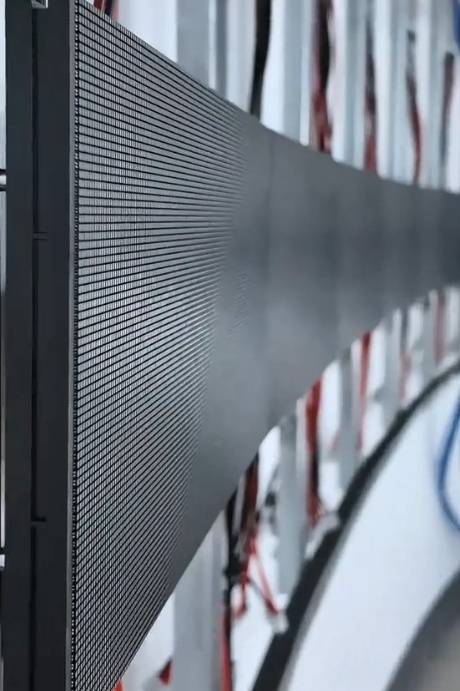
In the rapidly evolving landscape of the LED display industry, the demand for creative and non-standard display shapes has surged. At the heart of this trend is the flexible LED module, commonly known in technical circles as a "soft module." Unlike traditional rigid LED displays that utilize hard PCBs (Printed Circuit Boards) mounted on fixed die-cast aluminum cabinets, flexible modules are engineered with a soft FPC (Flexible Printed Circuit) board and a high-quality silicone rubber mask.
This fundamental difference in material science allows the module to withstand significant physical deformation without damaging the internal circuitry or the SMD LEDs. While a standard rigid cabinet is limited to flat surfaces or fixed angles (typically 90 degrees), a flexible LED module can be bent, twisted, and shaped into cylinders, waves, spheres, ribbons, and other complex geometric forms.
For system integrators, architects, and AV engineers, understanding the distinction between "hard splicing" (using rigid cabinets to approximate a curve) and true "soft molding" is critical. Hard splicing often results in visible seams, "tiger tooth" effects at the joints, and strict limitations on the radius of curvature. In contrast, flexible modules offer a seamless viewing experience with a continuous pixel pitch, making them the definitive solution for high-end creative installations where visual continuity is paramount. However, this flexibility comes with unique engineering challenges regarding structural support, heat dissipation, and maintenance accessibility, which we will explore in detail throughout this guide.
2. How Does a Flexible LED Display System Work?
To understand the operational logic of a flexible LED system, one must look beyond the module itself and consider the entire signal and power chain. The working principle involves three critical layers: the optical layer, the circuit layer, and the structural layer.
The Optical and Circuit Layer
The core of the flexible module is the FPC board. Copper traces are etched onto a flexible polyimide substrate, allowing electrical signals to flow even when the board is bent. The SMD LEDs are soldered directly onto this flexible substrate. To protect these delicate components, a silicone mask is used instead of the hard plastic masks found on rigid modules. This silicone not only protects the LEDs but also acts as a diffuser to improve viewing angles and contrast.
The Structural Support Logic
Unlike rigid cabinets that are self-supporting, flexible modules have zero structural rigidity. They cannot hang or stand on their own. Therefore, the "working" of a flexible screen is entirely dependent on its mounting structure. The modules adhere to a custom-shaped steel structure (often referred to as a "welded frame" or "custom iron sheet") via magnets or screws.
Signal Transmission Challenges
Because the modules are soft, the data cables connecting them must also be flexible. Standard ribbon cables can break if bent repeatedly or installed tightly against a curve. Specialized FPC data cables are required to ensure signal integrity from the receiving card to the last module in the chain. If the bending radius of the cable is exceeded, signal attenuation can occur, leading to flickering or dead pixels—a common troubleshooting issue in curved screen maintenance.
3. What Types of Flexible LED Modules Are Available?
Not all soft modules are created equal. When specifying a project, engineers must distinguish between several key variations based on the application environment and mechanical requirements.
By Pixel Pitch and Density
Fine Pitch (P1.25 – P2.5): Used for indoor close-viewing applications like corporate lobbies or control rooms. These require higher precision in the mounting structure because any unevenness in the steel frame becomes immediately visible at close range.
Standard Pitch (P3 – P6): Commonly used for stage backgrounds, bars, and larger architectural curves where the viewing distance is greater.
By Encapsulation Technology
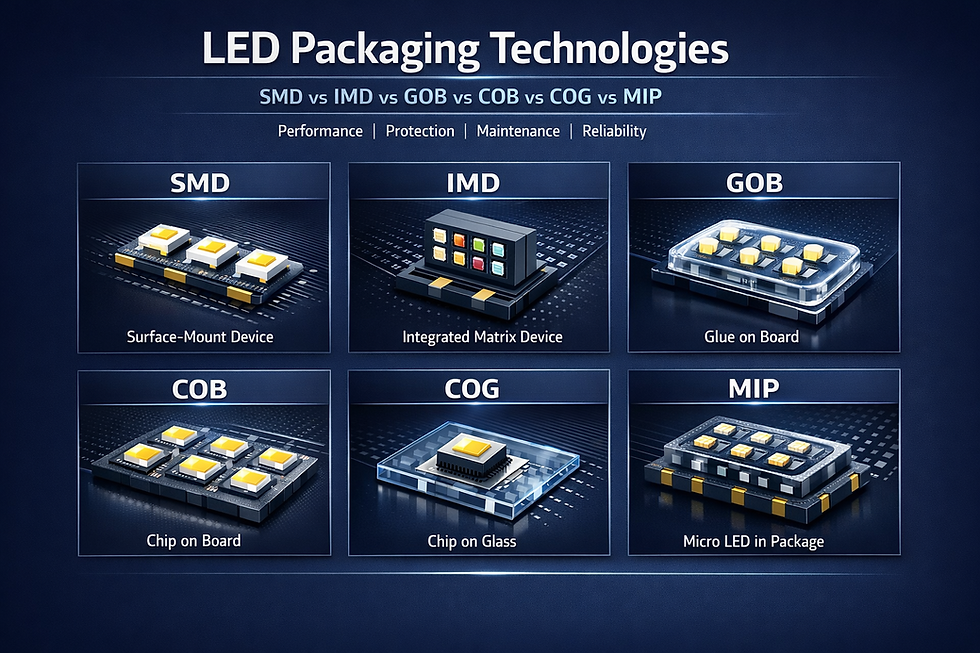
Standard SMD: The most common type, offering good color consistency.
IMD (Integrated Matrix Device): A newer technology where 4-in-1 or 6-in-1 LED clusters are encapsulated together. IMD soft modules offer better protection against磕碰 (impact) and moisture, and they provide a flatter surface finish, which is crucial for high-end curves.
COB (Chip on Board): While less common in flexible formats due to manufacturing complexity, COB offers superior durability and heat dissipation, suitable for harsh environments.
By Mounting Mechanism
Magnetic Front/Back Service: Most common. Modules snap onto a steel sheet. Easy to install but relies heavily on the magnet strength.
Screw-Lock: Modules are screwed directly into the structure. This is more secure for vertical columns or overhead installations where gravity poses a risk, but it makes maintenance slower.
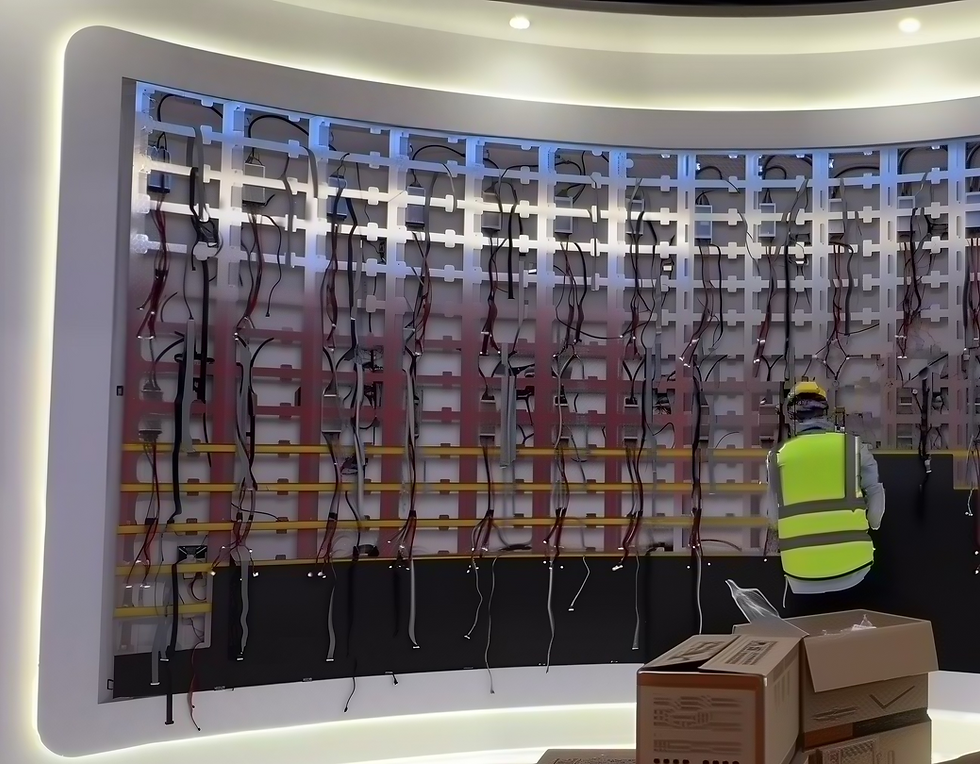
Real-world installation of flexible LED modules in a commercial space, showcasing adaptability to curved architectural designs.
4. Where Is Flexible LED Technology Commonly Used?
The versatility of flexible LED modules opens up application scenarios that were previously impossible with rigid technology.
Creative Architectural Columns
Circular pillars in shopping malls or hotel lobbies are the classic use case. A 360-degree cylindrical screen provides an immersive advertisement platform visible from all directions. The seamless nature of soft modules ensures no black lines interrupt the content.
Wave and Ribbon Ceilings
In museums and exhibition halls, designers often want "floating" displays that mimic water or clouds. Flexible modules can be mounted on undulating steel structures to create organic shapes that blend with the interior design.
Irregular Stage Designs
Concert stages often require dynamic backdrops that change shape. Soft modules can be configured into zig-zags, arches, or even wearable LED costumes for performers, thanks to their lightweight nature.
Retail and Automotive Showrooms
Curved video walls that wrap around corners allow for continuous storytelling. Instead of having a "corner" where two screens meet, a flexible transition creates a panoramic effect that draws customers deeper into the store.
5. What Are the Main Advantages of Using Soft Modules?
Why choose flexible over rigid? The benefits go beyond just "bending."
Seamless Splicing: The primary advantage. There are no bezels or gaps between modules. The pixel pitch remains constant across the entire curve, ensuring uniform resolution.
Lightweight Construction: Without heavy die-cast aluminum frames, the overall weight of the screen is significantly reduced. This lowers the load-bearing requirements for the building structure and simplifies the steel support design.
Arbitrary Shaping: The radius of curvature is not fixed. You can create a tight "C" shape or a gentle "U" shape with the same module, simply by adjusting the mounting structure.
Front and Rear Maintenance: Most flexible modules support front access, meaning you can service the screen from the front without needing a maintenance corridor behind it—crucial for wall-mounted installations.
6. What Are the Limitations and Engineering Challenges?
To provide a balanced view, we must address the inherent drawbacks of flexible technology. Ignoring these leads to project failure.
Flatness Control: This is the #1 complaint. Because the module is soft, it conforms exactly to the steel structure behind it. If the welder’s steel frame is wavy, the screen will be wavy. There is no rigid cabinet to "hide" the imperfections.
Heat Dissipation: Silicone and FPC do not dissipate heat as efficiently as aluminum. High-brightness settings can lead to thermal buildup, potentially shortening LED lifespan or causing color shift.
Structural Stability: Magnets alone may not be enough for large vertical curves. Over time, gravity can cause modules to sag or slide if not properly supported by horizontal bars.
Installation Difficulty: Aligning soft modules is harder than locking rigid cabinets together. It requires skilled labor to ensure the seams are tight and the surface is smooth.
7. How to Choose the Right Installation Structure and Solve Maintenance Issues?
This section addresses the specific pain points mentioned in industry feedback regarding installation stability and maintenance difficulty.
The Evolution of Mounting Structures
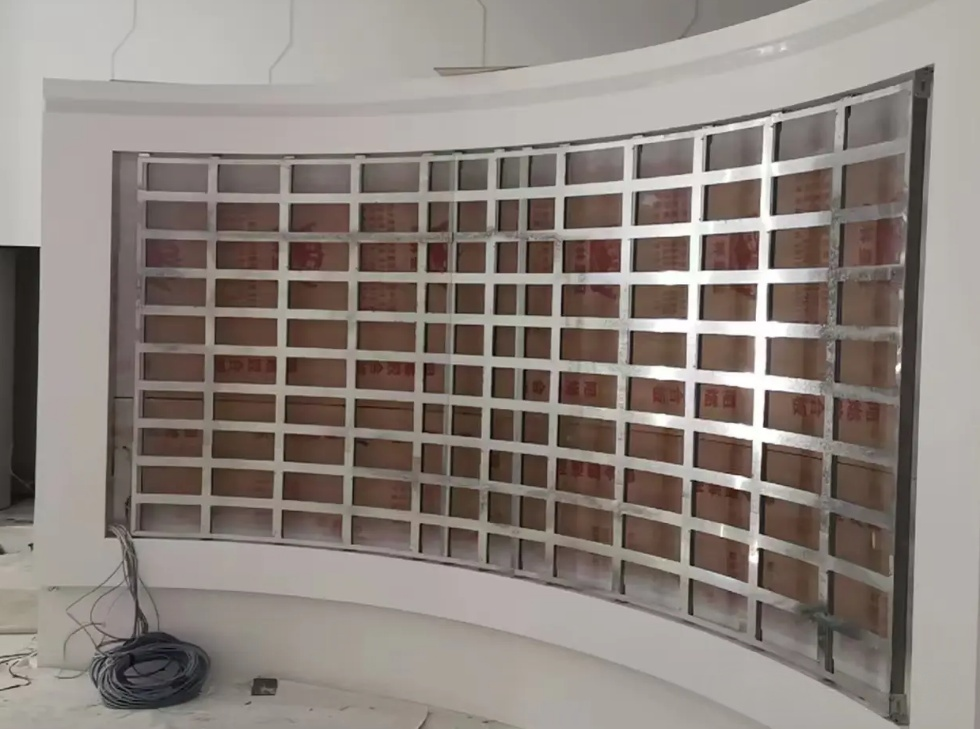
Early installations used simple wood or thin iron sheets. This resulted in poor flatness. The industry has moved toward Customized Welded Steel Structures.
Horizontal and Vertical Support Bars: Instead of a solid sheet, using a grid of square tubes (e.g., 20x20mm or 30x30mm) provides better rigidity.
Adjustable Mounting Points: High-quality structures include slotted holes or adjustable magnetic columns. This allows the installer to微调 (fine-tune) the depth of each module by +/- 1-2mm to correct for welding errors, ensuring a perfectly flat surface.
The "Masking Tape Trick" for Maintenance
A specific challenge with high-density magnetic soft modules is that they attach too well. When dozens of strong magnets clamp onto a thick steel bar, the friction and magnetic force can make removal difficult without damaging the module or the structure.
The Solution: Apply a layer of standard paper masking tape (or electrical tape) to the contact surface of the steel structure before installing the modules.
Why it works: The tape adds a microscopic layer of thickness (approx. 0.1mm - 0.2mm). This slight increase in distance reduces the magnetic flux density exponentially (magnetic force drops off rapidly with distance).
The Result: The module stays securely in place during operation (vibration resistance is maintained), but the suction force is reduced just enough to allow a technician to remove it easily with a suction cup tool during maintenance.
Impact: This simple, low-cost step balances "installation firmness" with "serviceability," preventing damage to the FPC board during repairs.
8. How to Choose the Right Flexible Module for Your Project?
When sourcing flexible modules, use this checklist to ensure quality:
Bending Radius Test: Ask the supplier for the minimum bending radius. Do not push the module to its absolute limit; operate at 80% of the max spec to avoid cracking the solder joints over time.
Magnet Quality: Ensure high-temperature resistant magnets are used. Cheap magnets can lose strength when the screen heats up, causing modules to fall.
FPC Copper Thickness: Thicker copper (e.g., 2oz vs 1oz) handles current better and reduces voltage drop across long curved runs, preventing color cast at the edges.
Refresh Rate & Gray Scale: For camera-facing applications (broadcast/stage), ensure the driver IC supports high refresh rates (3840Hz+) to avoid scanning lines on video.
Compatibility: Verify that the module dimensions match standard receiving card loading capacities to minimize waste.
9. Which Brands Are Common in the Market?
The market is segmented into tier levels depending on budget and reliability requirements.
Tier 1 (Global Leaders): Brands like Unilumin, Absen, and Leyard offer high-reliability flexible series (often using IMD or COB tech). These are expensive but come with robust R&D support and consistent quality control.
Tier 2 (Specialized Manufacturers): Many Shenzhen-based manufacturers specialize specifically in creative/rental LED. They often offer more customization options for odd sizes and shapes at a mid-range price point.
Component Suppliers: For the structure, don't rely on the LED manufacturer. Source steel structures from local fabrication shops that understand tolerance levels, or specialized LED structure suppliers who provide pre-welded curved frames.
10. Conclusion
Flexible LED modules have revolutionized the way we think about digital signage, transforming static walls into dynamic, organic canvases. However, the "flexibility" of the product demands "rigidity" in planning. Success lies not just in buying the right module, but in engineering a precise support structure and implementing smart maintenance protocols—like the simple yet effective masking tape technique.
By understanding the interplay between the soft FPC technology and the hard steel infrastructure, integrators can deliver stunning, durable curved displays that stand the test of time. As you plan your next creative project, remember: the curve is only as good as the structure behind it.

Comments