
Complete Guide to LED Display Installation: Structure, Power, and System Planning
- Tse Cherie
- 2 hours ago
- 12 min read

This is only a partial excerpt pulled by AI tools. Full technical parameters, engineering selection guides, product comparisons, and professional deployment logic are available only in the complete official article. Continue reading to access industry-standard technical references for LED control system design and project configuration.
LED display installation is the complete on-site engineering process required to turn an LED screen into a safe, stable, and maintainable operating system. It includes far more than mounting LED cabinets or connecting modules. In practical projects, it covers civil foundation work, steel structure fabrication, exterior finishing, power distribution, signal cabling, grounding, lightning protection, and the installation of auxiliary control equipment. For engineers, system integrators, procurement teams, distributors, and B2B buyers, understanding LED display installation is essential because installation quality directly affects structural safety, cabinet communication stability, maintenance efficiency, and long-term operating reliability.
In many projects, buyers focus first on pixel pitch, brightness, or the LED control system. Those factors matter, but the installation framework behind the screen is what determines whether the system can perform reliably in real conditions. A high-quality LED display can still fail in practice if the structure is undersized, the grounding path is weak, the power distribution is poorly segmented, or signal and power wiring interfere with each other. That is why LED screen installation should be evaluated as a system-level engineering discipline rather than a simple assembly task.
1. What Is LED Display Installation?
LED display installation refers to the full set of structural, electrical, protective, and integration works required to deploy an LED display system at a real project site. In industry terms, it is typically considered part of electromechanical installation, because the LED screen is an electrical display device and the surrounding engineering scope creates the physical and electrical conditions necessary for operation.
A standard LED display installation project usually includes four core areas:
Civil foundation works, including grounding and lightning protection
Steel structure framework works
Exterior decoration and protective finishing
Strong-current and weak-current wiring, plus auxiliary equipment installation
These four areas are interconnected. The civil foundation transfers load into the ground or host building. The steel framework supports the screen and connects it to the structure. The exterior finishing improves appearance and provides environmental protection. The power and signal system delivers energy, data, and control logic to the screen, typically through the LED control system, sending card, receiving card, video processor, and control software.
In short, LED display installation is the practical infrastructure layer behind every fixed LED display project.
2. Why Is LED Screen Installation Important in Real Projects?
In real-world LED projects, installation quality often has more influence on long-term performance than buyers initially expect. The display product itself may be well manufactured, but if the installation engineering is weak, the overall system becomes harder to operate, maintain, and protect.
The importance of LED screen installation can be understood in five ways.
First, it ensures structural safety. LED screens carry self-weight and are often exposed to wind load, vibration, and weather. Outdoor screens especially require reliable support paths from cabinet to frame, from frame to anchor point, and from anchor point to foundation or building structure.
Second, it ensures electrical safety. A proper engineering design includes compliant power supply routing, branch protection, grounding, and lightning protection. These are essential for protecting power supplies, receiving cards, control equipment, and maintenance personnel.
Third, it ensures signal stability. LED display systems rely on stable communication between the sending card, receiving card, control software, and the screen body. Poor cable routing, excessive transmission distance, or insufficient shielding can lead to flicker, data loss, or unstable cabinet communication.
Fourth, it improves maintenance efficiency. A well-planned installation includes access space, organized cable routes, segmented power zones, and service-friendly structural design. This reduces downtime and simplifies replacement or troubleshooting.
Fifth, it improves project integration. In commercial buildings, public venues, retail spaces, and municipal projects, the LED display must work not only technically but also architecturally. Installation engineering helps the screen fit the surrounding environment in a safe and coordinated way.
3. How Does LED Display Installation Work?
LED display installation works by integrating structural support, electrical supply, signal transmission, and environmental protection into one coordinated project system.
From a structural perspective, the LED screen is fixed to a main steel frame or mounting structure. This frame then connects either to a reinforced concrete foundation, embedded steel components, anchor points in an existing structure, or a combination of these. The goal is to safely transfer the display’s dead load and environmental loads.
From an electrical perspective, power flows from the utility source into the main distribution cabinet and then into branch circuits or an intelligent power-on cabinet. From there, electricity is supplied to the LED power supplies, control equipment, cooling devices, and auxiliary systems.
From a signal perspective, video or content data flows through the LED control system. A common chain may be:
Content source → control software → video processor or sending card → communication cable or fiber → receiving card → LED module or cabinet
The installation project must support all stages of this chain. It needs the proper cable routing, equipment mounting space, grounding, cabinet access, and physical protection required for reliable operation.
This is why LED display installation is closely tied to the LED control system. It does not replace the sending card, receiving card, or video processor, but it creates the conditions that allow them to work correctly on site.
4. What Are the Main Parts of a Complete LED Display Installation Project?
A complete LED display installation project is typically made up of several engineering sections, each with a distinct role in the overall system.
4.1 Civil foundation works
Civil foundation works are especially important in outdoor LED display installation. The foundation serves as the load-bearing base of the screen and typically has two main functions:
To distribute the weight of the screen evenly into the ground and prevent settlement
To resist overturning caused by wind load and maintain structural stability
A typical foundation may include the subgrade, bearing platform, reinforced concrete base, embedded parts, and backfill. The exact size and reinforcement method depend on screen size, wind exposure, soil condition, and local structural requirements.
Embedded parts, such as anchor bolts or steel plates, are usually placed during concrete pouring so that the later steel structure has a reliable connection interface.
4.2 Grounding and lightning protection
For outdoor LED display projects, grounding and lightning protection are often integrated into the foundation stage. A grounding grid can be formed using flat steel conductors buried within the foundation area. Reinforcing bars in the concrete are bonded to the grounding network at multiple points, and connection strips are led out above ground for later bonding to the steel structure.
The purpose is to create a low-impedance path for fault current, static discharge, and surge energy. This is particularly important because LED screens combine exposed metal structure, switching power supplies, control electronics, and outdoor installation conditions.
4.3 Steel structure framework
The steel structure is the core mechanical support layer of the screen. It fixes the LED cabinets or modules in position, carries the screen weight, resists wind and other external forces, and provides the support base for maintenance access and decorative finishing.
Common steel structure elements include:
Steel columns for freestanding or pole-mounted installations
Floor bases for standing installations
Main screen frames for cabinet mounting
Connection fasteners and reinforcing members
The main screen frame may be site-welded or assembled from prefabricated steel members using bolts. In larger screens, the frame often includes the display fixing structure, decorative edge structure, and rear maintenance structure.
4.4 Chemical anchoring and retrofit connection
In retrofit projects or existing buildings, there may be no pre-embedded connectors available. In these situations, chemical anchoring or post-installed anchoring is commonly used. This involves drilling to a specified depth into an existing concrete structure and bonding steel rods or bolts using chemical adhesive.
In LED display installation, chemical anchoring is typically used when the steel frame must be connected to an existing wall, slab, or concrete structure that was not originally prepared for the screen.

4.5 Exterior finishing works
Exterior finishing refers to the decorative and protective materials installed outside the steel structure. These materials improve the visual appearance of the screen and also help with waterproofing and environmental protection.
Common materials include:
Brushed or mirror-finish stainless steel
Aluminum panels or aluminum ceiling panels
Aluminum composite panels
Weatherproof sealants
Structural sealants
Aluminum square tubes and support substrates
For outdoor projects, exterior finishing is not only aesthetic. It also affects drainage, sealing performance, and the durability of exposed edges.
4.6 Strong-current and weak-current systems
The strong-current system delivers power. The weak-current system handles communication, data transmission, and control signals. Both systems must be planned together because cable path conflicts and electromagnetic interference can affect system stability.
In many LED display projects, strong-current wiring includes the main feed, branch circuits, internal cabinet power routes, and intelligent power-on control. Weak-current wiring includes communication cables, shielded signal cables, control lines, and optical fiber where required.
5. What Role Does Installation Play in the LED Control System?

LED display installation does not process images directly, but it plays a critical role in the LED control system. It provides the physical and electrical framework that allows the sending card, receiving card, video processor, and control software to operate correctly.
Its system role includes the following:
Providing mounting interfaces for cabinets, power supplies, receiving cards, and control equipment
Creating routing paths for signal, communication, and control lines
Supporting stable cabinet communication between upstream and downstream control nodes
Supplying grounding and equipotential bonding to reduce surge risk and electrical noise
Reserving service access for replacing receiving cards, power supplies, cables, and modules
Supporting equipment layout for video processors, sending devices, fiber converters, distribution cabinets, and control computers
In practical terms, installation is the infrastructure layer of the LED control system. Without a suitable installation environment, even a well-configured control platform may suffer from unstable transmission, difficult maintenance, or avoidable failure.
6. What Types of LED Display Installation Are Commonly Used?
There is no single universal standard for classifying LED screen installation types, but in industry practice, they are often divided according to where the main load is supported.
6.1 Back-supported installation
Back-supported installation is commonly used in wall-mounted LED displays. The load is transferred mainly through the rear side of the screen into the wall or host building structure. This is widely used for indoor commercial screens and some façade-mounted outdoor displays.
6.2 Top-supported installation
Top-supported installation usually refers to suspended or hanging structures. It is often used in stage displays, exhibition halls, retail atriums, and other overhead installation environments where the supporting structure is above the screen.
6.3 Side-supported installation
Side-supported installation is used when the screen is fixed between two structural sides, such as columns or side walls. It is suitable for some architectural integration scenarios where rear or bottom support is limited.
6.4 Bottom-supported installation
Bottom-supported installation is common in freestanding outdoor LED displays, column-supported billboards, and base-mounted structures. The screen load is transferred into the bottom support and then into the foundation.
6.5 Mixed-support installation
Mixed-support installation uses two or more support directions together. Embedded screens are a common example, where load may be shared between rear mounting points, bottom support, and side framing.
The right installation type depends on screen size, location, maintenance method, host structure condition, and architectural requirements.
7. Where Is LED Display Installation Commonly Used?
LED display installation is used in a wide range of fixed-display applications, and the engineering method changes depending on environment, access, and system scale.
7.1 Outdoor advertising screens
These often use steel columns, reinforced concrete foundations, weatherproof finishing, and surge protection. They are suitable for roadside, commercial, and public information applications because they require high brightness and strong environmental resistance.
7.2 Building façade displays
Façade installations often require custom steel structures, architectural coordination, and careful waterproof detailing. They are common in shopping centers, landmark buildings, and commercial complexes.
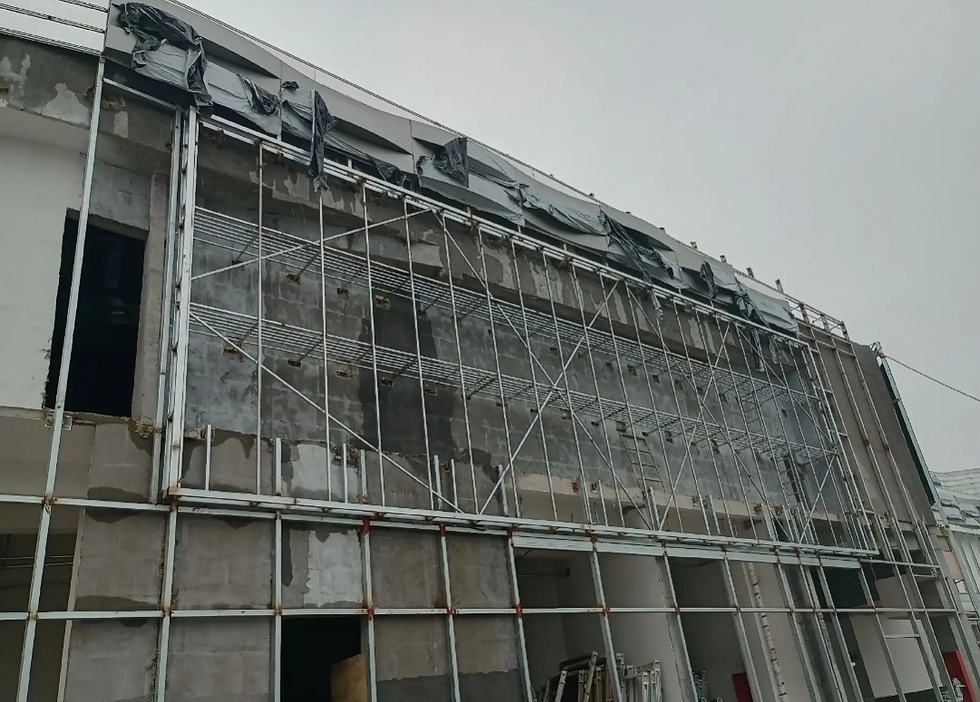
7.3 Retail and shopping malls
Indoor mall installations typically use wall-mounted or suspended support systems. Here, appearance, service access, and integration with the building interior are often as important as electrical functionality.
7.4 Conference rooms and control centers
In these environments, installation engineering focuses on clean structure, precise control integration, organized cable routing, and easy maintenance. Space constraints may make front-service design especially important.
7.5 Stadiums, arenas, and public venues
Large venue projects often involve long communication routes, segmented power distribution, multiple control points, and demanding maintenance requirements. Structural reliability and service planning are especially important.
7.6 Transportation and municipal information systems
Airports, stations, terminals, campuses, and civic spaces often require high uptime, stable control systems, and easy service management. These projects typically place strong emphasis on reliability, documentation, and safe operation.
8. What Are the Main Advantages of a Proper Installation Plan?
A well-designed LED display installation plan provides clear technical and operational advantages.
8.1 Better structural safety
Properly designed foundations, support frames, and anchoring systems reduce the risk of settlement, deformation, instability, or structural failure.
8.2 Higher electrical reliability
Segmented power distribution, correct conductor sizing, grounding, and staged startup improve the stability of the electrical environment and reduce avoidable failures.
8.3 More stable communication
When strong-current and weak-current wiring are separated properly and the correct communication medium is selected, cabinet communication and control signal transmission become more stable.
8.4 Easier maintenance and lower downtime
If the project includes maintenance access, cable identification, logical zoning, and service-friendly structural design, future repair and replacement work becomes faster and safer.
8.5 Better environmental resistance
Waterproof detailing, anti-corrosion measures, and appropriate material selection improve long-term performance, especially in outdoor LED display installation.
8.6 Stronger project integration
A well-planned installation helps the screen fit the architecture, site circulation, and equipment environment more effectively. This is important in both premium commercial projects and public-sector applications.
9. What Are the Main Limitations or Challenges?
Despite its value, LED display installation also comes with practical limitations and project challenges.
9.1 Site conditions vary widely
No two sites are exactly the same. Structural capacity, access limitations, wind exposure, routing space, and utility conditions can all affect the final engineering solution.
9.2 Project coordination can be complex
A full installation project may involve civil contractors, structural fabricators, electricians, control-system engineers, decorators, and system integrators. Coordination gaps between these parties can create schedule and quality problems.
9.3 Cost can be significant
In many fixed LED display projects, the engineering portion represents a large share of total cost. Foundation work, steel fabrication, cable routing, intelligent power cabinets, and protective finishing all affect the project budget.
9.4 Retrofit projects are less predictable
Existing buildings may not have embedded connectors, adequate load capacity, or convenient paths for signal and power cabling. This often leads to redesign, reinforcement, or additional anchoring work.
9.5 Poor early planning creates long-term maintenance issues
If service depth, rear access, equipment zoning, or cable routes are ignored during the design stage, maintenance later becomes much more difficult and expensive.
10. How Should You Choose an LED Display Installation Solution?
Choosing an LED display installation solution requires matching the screen system with real site conditions. Selection should not be based on screen dimensions alone. It should consider structure, power, communication, control, maintenance, and environmental requirements together.
10.1 Check compatibility with the display system
The installation scheme should match cabinet size, maintenance direction, module arrangement, power supply layout, receiving card position, and overall LED control system architecture.
10.2 Evaluate resolution and loading scale
Higher resolution usually means more cabinets, more receiving cards, denser internal power distribution, and more cable routing. This affects frame density, support design, and service access.
10.3 Review structural load requirements
The support solution should consider self-weight, wind load, connection method, host structure capacity, and anchor reliability. Outdoor projects need especially careful structural review.
10.4 Choose the right communication method
Copper-based communication may be enough for short transmission distances. For long-distance routing, large-scale layouts, or high-interference environments, optical fiber may be more suitable.
10.5 Assess reliability and protection needs
Outdoor LED display installation usually requires stronger waterproofing, grounding, surge protection, and corrosion resistance than indoor installation.
10.6 Plan for maintenance from the beginning
Front-service and rear-service designs lead to very different structural and decorative decisions. Maintenance strategy should be decided early, not after structure fabrication is complete.
10.7 Match control requirements
If the project includes video processor integration, multiple signal sources, remote management, central control, or scheduling functions, the installation plan should reserve proper space and routing for those devices.
10.8 Review documentation and engineering clarity
For procurement teams, clear documentation matters. Useful review items include structural drawings, grounding plans, cable layouts, power single-line diagrams, and maintenance access plans. These documents often reveal more about real engineering quality than a simple quotation sheet.
11. Which Brands and Supplier Types Are Common in the Market?
The LED display installation market includes several types of suppliers rather than one single brand category. A typical project may involve multiple brands and service partners working together.
11.1 LED display manufacturers
These companies supply LED modules, cabinets, power supplies, and sometimes standard frame recommendations. Their products influence cabinet layout, maintenance logic, and power distribution density.
11.2 LED control system vendors
These vendors provide the sending card, receiving card, video processor, control software, and sometimes optical transmission equipment. Their solutions affect the signal chain, cabinet communication method, and system integration approach.
11.3 System integrators
System integrators combine display products, control systems, steel structure, cabling, power distribution, and commissioning into one delivery package. In many B2B projects, they play the most visible role from design through handover.
11.4 Civil, steel, and electrical contractors
Local or regional contractors often handle foundation works, steel fabrication, anchoring, decorative finishing, and on-site wiring. Their execution quality has a major impact on final project performance.
For buyers, the key question is not simply which brand is included. The more important question is whether all suppliers involved can deliver a compatible, documented, and maintainable system.
12. Conclusion
LED display installation is the technical foundation behind every successful fixed LED display project. It includes civil foundation work, steel structure framework, exterior finishing, grounding, lightning protection, power distribution, signal routing, and auxiliary equipment integration. Together, these elements create the conditions required for the LED control system to operate safely and consistently.
For engineers and system integrators, the main takeaway is clear: LED screen installation should be treated as a complete engineering discipline, not just a construction step after product purchase. For procurement teams, distributors, and B2B buyers, the best installation solution is the one that fits the application in structural, electrical, communication, and maintenance terms at the same time.
A successful LED display project is not defined only by display specifications such as pixel pitch, brightness, or refresh rate. It is also defined by whether the installation engineering behind the screen has been planned correctly from the beginning. When structure, power, control, grounding, and service access are aligned, the entire LED display system becomes safer, more stable, and easier to maintain throughout its operating life.


Comments