
What Is a NovaStar 3D LED Display Loading Solution? Complete Guide to Working Principles, Types, and Selection
- Tse Cherie
- 3 days ago
- 10 min read

In today’s LED display market, many projects are no longer competing on brightness or resolution alone. Outdoor media façades, retail flagships, museums, event stages, and branded showrooms increasingly need content that feels more immersive and visually dimensional. This is where a NovaStar 3D LED display loading solution becomes relevant.
For many buyers and project teams, however, a common question remains: is 3D on LED simply a content effect, or does it require a dedicated control architecture? In practice, the answer is closer to the latter. A 3D LED display is not just a screen playing special video. It depends on coordinated processing between the LED control system, video processor, sending card, receiving card, control software, and the physical geometry of the display itself.
A NovaStar 3D LED display loading solution refers to the hardware-and-software framework used to deliver three-dimensional visual effects on LED displays through synchronized signal transmission, processor configuration, screen mapping, and content alignment. Depending on the project, this may support active 3D LED display, passive 3D LED display, or naked-eye 3D LED display.
For engineers, system integrators, procurement teams, distributors, and B2B decision-makers, understanding this system matters because 3D visual performance depends on far more than the LED panel. It is shaped by how the control platform handles timing, resolution, cabinet communication, custom screen structures, and playback workflow. The sections below explain what this solution is, where it fits in the LED system, how it works, what types are available, and how to choose the right configuration for different applications.
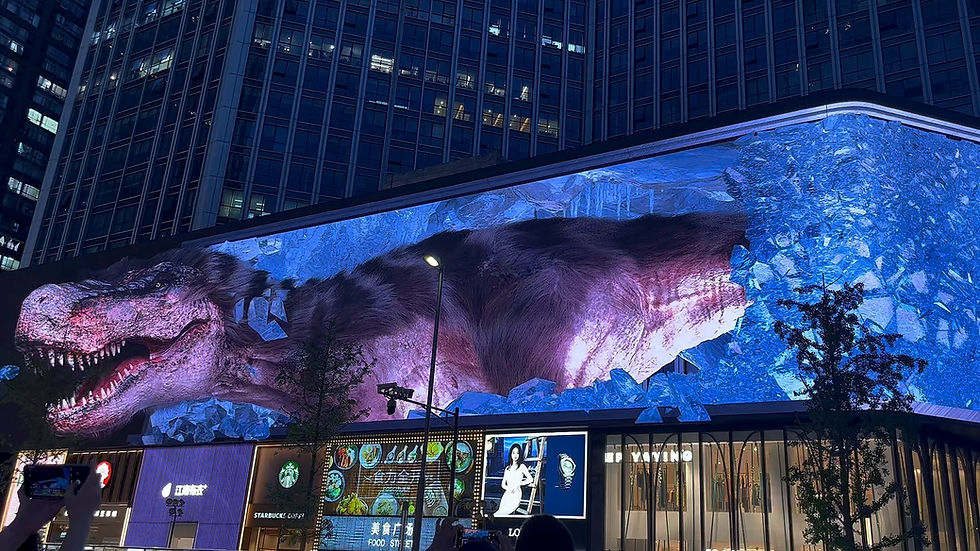
What Is a NovaStar 3D LED Display Loading Solution?
A NovaStar 3D LED display loading solution is a specialized LED display control approach used to support stereoscopic or perspective-based 3D visual output on LED screens. The word “loading” here does not simply mean uploading content to a display. In the LED industry, it relates more broadly to how the control system loads, processes, distributes, and maps image data across the screen so the intended 3D effect can be displayed correctly.
In a conventional 2D LED project, the main goal is accurate rendering of standard video content across a flat or standard-shaped display. In a 3D LED project, the control system must do more. It may need to manage:
Left-eye and right-eye image timing
Synchronized dual-channel playback
Customized pixel mapping
Geometric correction for irregular screens
Timing alignment between processor outputs and screen response
Perspective-based content placement for naked-eye 3D effects
This means a 3D LED solution is not only a content format issue. It is part of the broader LED control system architecture. NovaStar’s role in this context is to provide the processors, control logic, screen mapping tools, and software environment needed to translate 3D source materials into correct output on LED screens.
From a technical perspective, the solution sits between the media source and the final LED modules. From a project perspective, it helps convert a creative concept into a buildable and controllable LED display system.

Why Does Functional Positioning Matter in the LED Control System?
To evaluate any 3D LED solution correctly, it is useful to understand where it sits in the full signal chain. A standard LED display system usually includes:
Content source, such as a media server, workstation, or playback system
Video processor or integrated LED controller
Sending card or sending function
Signal transmission path, often Ethernet or fiber in larger systems
Receiving cards installed inside LED cabinets
HUB boards and module connections
LED modules and cabinet structure
Control software for mapping, calibration, and configuration
The NovaStar 3D LED display loading solution does not replace this architecture. Instead, it adds 3D-specific logic across several layers of it.
At the source level
The system must accept content prepared for a 3D workflow. That content could be stereoscopic animation, dual-eye video streams, perspective-shaped naked-eye 3D content, or custom-rendered visuals from media servers.
At the processor level
The video processor and controller become responsible for converting that content into the correct display logic. This can include frame sequencing, dual-output synchronization, canvas segmentation, resolution management, and timing correction.
At the transmission level
The sending card, signal outputs, and transmission path must be capable of stable high-bandwidth delivery. This is especially important in high-refresh or large-format naked-eye 3D applications where pixel loading and signal integrity affect final visual performance.
At the cabinet level
The receiving card, cabinet mapping, and module arrangement must align with the intended display structure. In corner or curved projects, cabinet communication and physical continuity are essential to preserve the illusion of depth.
In practical terms, this means the NovaStar 3D loading solution serves as a bridge between content intention and screen behavior. It ensures that the LED display system does not simply show video, but shows it in a way that supports 3D depth perception.
How Does a NovaStar 3D LED Display Loading Solution Work?
The working principle depends on the type of 3D effect being used, but the overall signal chain follows a familiar LED display logic: source to processor, processor to sending output, sending output to receiving card, and receiving card to modules.
Where 3D changes the system is in how image data is prepared and interpreted.
Standard signal path in an LED control system
In a normal system, video content enters the LED controller or processor from a source device. The processor reformats or scales the signal to match the display resolution, then distributes output through one or more sending channels. That data is transmitted to receiving cards, which decode and forward it to the LED modules.
For 3D applications, the same chain is used, but the signal now contains additional logic such as:
Separate image information for left and right eyes
High-speed frame alternation
Perspective-adjusted image placement
Multi-surface mapping
Timing alignment for synchronization
How active 3D works
In an active 3D LED display, the system alternates left-eye and right-eye images at a high refresh rate. Synchronized shutter glasses open and close so each eye sees only the intended frame stream.
The logic is typically:
A media server or playback source outputs separate left-eye and right-eye image information.
The processor organizes the stream into synchronized playback timing.
The LED control system sends the timed image sequence to the display.
Active glasses sync with the display and separate the images by eye.
The viewer perceives depth through binocular disparity.
This approach places high demands on refresh rate, timing stability, and processor coordination.
How passive 3D works
In a passive 3D LED display, image separation is achieved through polarization rather than active timing inside the glasses. Matching polarized glasses direct each eye to the corresponding image information.
This method can be more comfortable for longer viewing periods, but it often requires more specialized optical integration and is less common in general-purpose LED installations than naked-eye 3D.
How naked-eye 3D works
A naked-eye 3D LED display creates the perception of depth without glasses. Instead of relying on binocular separation through eyewear, it uses screen geometry, perspective-adjusted content, and controlled mapping to produce a visual illusion from one or more key viewing angles.
The process usually involves:
Designing the LED screen in a suitable shape, such as a corner, cube, arc, or concave/convex form.
Creating content from a pre-defined virtual camera perspective.
Using control software and screen design tools to map the content precisely across the display.
Aligning cabinets, calibration, and signal outputs so the visual illusion remains coherent.
In these projects, the relationship between content production and screen structure is critical. The 3D effect will only work if the geometry, pixel mapping, and playback system all match the intended illusion.
What Types of 3D LED Display Solutions Are Available?
From an industry perspective, 3D LED solutions are commonly divided into three categories.
1. Active 3D LED Display
This type uses synchronized shutter glasses and alternating left/right playback. It is suitable for controlled viewing environments where image separation accuracy matters and viewers can use dedicated glasses.
Typical use cases include:
Stage effects
Simulation or visualization spaces
Brand showrooms
Specialized exhibitions
Its strength lies in precise stereoscopic delivery, but it requires system synchronization and audience eyewear.
2. Passive 3D LED Display
This type uses polarized image output and matching glasses. It is often associated with cinema-like viewing or exhibition environments where user comfort is important.
Typical use cases include:
Exhibition halls
Museums
Indoor demonstration spaces
Long-duration viewer experiences
Its implementation is more specialized because it combines LED display behavior with optical separation requirements.
3. Naked-Eye 3D LED Display
This is the most commercially visible form of 3D LED technology today. It does not require glasses and instead depends on display shape, content perspective, and mapping accuracy.
Typical use cases include:
Building-corner billboards
Creative DOOH media
Urban landmarks
Retail storefront media façades
Architectural LED installations
Because it is highly visible and viewer-friendly, it is often chosen for public-facing media projects.
Where Is a NovaStar 3D LED Display Solution Commonly Used?
Different types of 3D LED systems fit different application environments. The right use case depends on viewing behavior, project scale, and the required visual effect.
Outdoor LED landmarks
Large outdoor corner displays are among the most recognizable naked-eye 3D applications. They are effective in city centers, commercial districts, and landmark buildings because the illusion is strong at scale and attracts public attention without requiring interaction from the viewer.
Theme parks and museums
These spaces often need storytelling rather than conventional advertising. Active or naked-eye 3D can help create immersive visual scenes for educational exhibits, themed environments, or simulated objects.
Corporate showrooms
Showrooms often use 3D LED installations to present products, concepts, or brand environments in a more engaging way. Depending on room design and audience control, active or passive 3D may be suitable.
Retail and malls
Retail spaces benefit from 3D visual content because it can increase dwell time and improve attention to storefront displays. Naked-eye 3D is especially relevant where customers are moving through open public areas and glasses are impractical.
Stage and event venues
Concerts, product launches, and live events may use active 3D or perspective-driven LED effects to add visual layering and dimensional scenes. These projects usually depend on close integration between the LED control platform, playback server, and event production workflow.

What Are the Main Advantages of a NovaStar 3D LED Display Loading Solution?
A well-planned 3D LED system offers several practical advantages.
Stronger visual depth and engagement
Compared with standard 2D playback, 3D content can create a more immersive experience. This is especially useful in public advertising and experiential installations where visual impact matters.
Support for multiple 3D modes
The ability to support active, passive, and naked-eye approaches gives project teams flexibility. Not every project has the same audience behavior, hardware budget, or viewing condition.
Integration with existing LED control logic
Because the solution is built around a standard LED control system structure, it works within familiar workflows involving the sending card, receiving card, video processor, and control software.
Support for complex display geometry
Many 3D effects depend on custom screen shapes rather than simple flat rectangles. Mapping tools and processor control are important for corners, arcs, cubes, cylinders, and mixed-surface displays.
High refresh and stable signal handling
3D projects often require reliable signal transmission, clean timing, and strong processor capacity. A mature control ecosystem helps reduce problems such as flicker, ghosting, or frame inconsistency.
What Are the Limitations of 3D LED Display Systems?
While 3D LED technology offers clear advantages, it also has constraints that should be evaluated carefully.
Content quality is critical
A 3D LED system can only perform well if the source content is designed correctly. Weak perspective design, poor stereoscopic rendering, or low-quality animation can limit the final result.
System complexity is higher than 2D
Compared with a standard display, a 3D project involves more variables, including timing, geometry, mapping, synchronization, and playback coordination.
Cost is typically higher
Hardware, processing capacity, content production, and calibration requirements may all increase project cost relative to a conventional 2D LED solution.
Viewing angle can be restrictive
This is particularly true for naked-eye 3D. The illusion is often optimized for a specific viewing zone and may weaken when viewed from other angles.
Maintenance and alignment matter more
3D displays, especially those using custom structures, require consistent cabinet alignment and stable system configuration. Small deviations in structure or mapping can affect the visual effect more noticeably than in a 2D installation.
How to Choose the Right 3D LED Display Solution?
Choosing the right 3D LED solution involves more than selecting a controller model. It requires coordination between application goals, control requirements, and long-term maintenance expectations.
Check control system compatibility
The processor, sending architecture, receiving card capacity, and software tools should all support the required resolution, frame logic, and display structure. Compatibility should be confirmed at the full-system level, not only by one hardware component.
Review resolution and loading capacity
A 3D display may need higher resolution, denser pixel mapping, or more processor outputs than a comparable 2D project. The selected system must be able to handle both the total pixel load and the output arrangement.
Match the 3D method to the use case
Building billboard: Naked-eye 3D
Indoor retail display: Passive or naked-eye 3D, depending on structure
Stage performance: Active 3D in controlled environments
Showroom presentation: Active or passive 3D
Large outdoor media façade: Naked-eye 3D with advanced mapping support
Evaluate signal transmission method
Large 3D installations may involve long cable runs, multiple output regions, or fiber distribution. Stable signal transmission is necessary to preserve timing, output consistency, and cabinet communication.
Consider maintenance and reliability
Projects with unusual cabinet geometry, large façades, or high public visibility should be reviewed for service access, re-calibration needs, and long-term operating stability.
Confirm software and content workflow
The chosen control software must support screen design, custom resolution, mapping logic, and parameter management. Just as importantly, the content team must be able to produce assets that match the selected 3D approach.
Which Brands Are Common in the Market?
The 3D LED display market involves several different technology layers, including LED control brands, media server brands, and content production tools. NovaStar is one of the most widely recognized names in the LED control segment, particularly in projects that require flexible screen mapping, scalable processor architecture, and established configuration tools.
Within the NovaStar ecosystem, commonly referenced products for 3D-related projects include:
NovaPro UHD
MX Series controllers such as MX600 and MX40
VX Series controllers such as VX1000 and VX600 Pro
NovaLCT for configuration and parameter management
SmartLCT for screen design and mapping
In practice, 3D LED projects may also involve external content and playback platforms such as Resolume, Notch, Unity-based systems, or Unreal Engine workflows. These tools are often part of the upstream content pipeline, while the LED control platform manages output, screen loading, and final display behavior.
More broadly, buyers should remain neutral and practical in brand evaluation. The right choice depends on:
Compatibility with the planned LED control system
Processor loading capacity
Support for custom screen shapes
Integration with media servers
Reliability of control software
Familiarity of the integration team with the platform
Conclusion
A NovaStar 3D LED display loading solution is not simply a way to play 3D content on an LED screen. It is a control-system-based framework that coordinates content preparation, video processor behavior, sending card output, receiving card mapping, control software, and screen geometry to produce a three-dimensional visual effect.
Its value is strongest in projects where standard flat playback does not meet the visual objective, such as urban landmarks, experiential retail, exhibition environments, and event stages. At the same time, 3D LED deployment requires realistic planning. The final result depends on the relationship between content quality, hardware capability, signal transmission stability, calibration accuracy, and screen structure.
For engineers, system integrators, procurement teams, and B2B buyers, the most important selection priorities are usually compatibility, processor capacity, mapping flexibility, communication reliability, maintenance access, and fit between the display architecture and the content workflow.
In short, the right 3D LED solution is the one that aligns creative goals with a supportable and technically coherent LED control system.


Comments