
Leyard Completes 2,200㎡ Full-Scenario LED Display Project for Azteca Stadium at the 2026 FIFA World Cup

Introduction
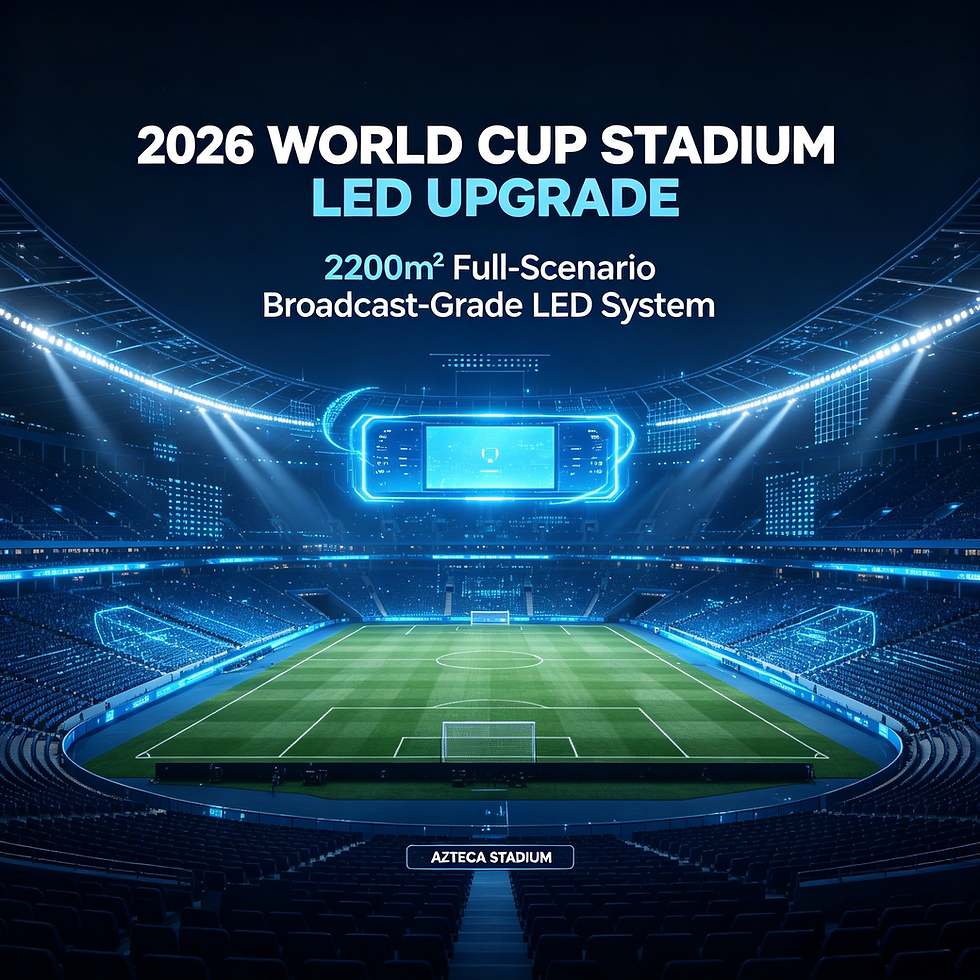
The 2026 FIFA World Cup has once again raised the global standard for sports venue digital infrastructure. For host stadiums, LED display systems are no longer optional decorative elements — they have become core visual infrastructure that supports live broadcasting, fan experience, sponsor branding, and long-term venue operation.
Estadio Azteca in Mexico City, one of the most historic football stadiums in the world, has completed a comprehensive LED display upgrade for the 2026 World Cup. According to Leyard, the company provided more than 2,200 square meters of LED display solutions across multiple indoor and outdoor zones within the stadium. This project represents another major milestone for Chinese high-end LED technology in top-tier international sports venue construction.
Unlike traditional stadium upgrades that focus mainly on one or two central scoreboards, the Azteca Stadium project adopts a full-scenario LED layout. It includes main stadium screens, inner curved ribbon LED displays, exterior LED walls, and giant structural column LED displays. The system is designed to support live match information, broadcast content, fan interaction, advertising, and long-term multi-purpose venue operation.
1. Project Overview
Estadio Azteca is one of the most iconic football stadiums in the world. It previously hosted FIFA World Cup matches in 1970 and 1986, and has now become a rare venue to host World Cup football matches across three different tournament cycles.
For the 2026 World Cup, the stadium underwent a large-scale visual system renewal. Leyard supplied more than 2,200 square meters of integrated LED display systems, covering multiple display areas inside and outside the venue. The project was built to support match-day operations, spectator experience, broadcast production, and commercial display requirements.
The project scope includes:
North and south main LED scoreboards
Inner curved ribbon LED displays
Exterior large-format LED walls
Giant vertical column LED displays
Unified LED control system and signal infrastructure
This full-area LED solution transforms Azteca Stadium from a traditional football venue into a modern, broadcast-ready digital sports arena.
2. Why the Azteca LED Project Is Significant
For a global event such as the FIFA World Cup, stadium LED displays must perform multiple roles simultaneously. They are not only scoreboards, but also broadcast production tools, fan experience platforms, advertising carriers, and venue safety communication systems.
A professional World Cup stadium LED system must support:
Real-time score and timing display
Match statistics and player information
Goal replays and slow-motion highlights
VAR-related visual support
Sponsor advertising and brand display
Fan interaction and atmosphere creation
Emergency information delivery
Long-term venue commercial operation
Leyard’s project at Azteca Stadium reflects a clear industry shift: modern stadiums are moving beyond single-screen installations toward fully integrated, venue-wide digital display systems.
3. Full-Area LED Display Layout and Functions

3.1 North and South Main LED Screens
The north and south main LED screens serve as the central information hub of the stadium.
Their primary functions include:
Real-time match timing and live scores
Player lineups and match statistics
Goal replays and slow-motion highlights
VAR review and broadcast support
Match announcements and safety alerts
These screens must meet strict FIFA-level requirements for brightness, color accuracy, refresh rate, and system reliability. They need to deliver clear visibility for spectators in distant seats while producing stable, flicker-free images for global television and streaming broadcast cameras.
3.2 Inner Curved Ribbon LED Displays
The inner curved ribbon LED displays are installed along the stadium’s internal seating structure. Unlike traditional flat LED boards, curved ribbon displays can extend visual content around the stadium bowl, reducing viewing blind spots and creating a more immersive atmosphere.
Their main applications include:
Player entrance animations
Goal celebration visuals
Fan cheering content
Sponsor brand display
Match atmosphere lighting
Crowd guidance and emergency messaging
For stadium operators, ribbon displays also create additional advertising inventory. This is particularly valuable because they can be seen by spectators across different seating sections and can be integrated into global broadcast feeds.
3.3 Exterior Large LED Walls
Exterior LED walls extend the stadium’s digital experience beyond the seating bowl into surrounding public areas.
Before matches, they can display:
Welcome messages
Match previews
Ticketing information
Crowd guidance
Sponsor videos
Public safety notices
During the World Cup, these screens help create a strong event atmosphere for fans arriving at the stadium. After the tournament, they can continue to support commercial advertising, concerts, club matches, city events, and public announcements.
3.4 Giant Column LED Displays
Giant column LED displays are one of the most distinctive parts of the project. They convert previously static stadium architecture into dynamic digital media surfaces.
These displays can be used for:
Brand promotions
Event countdowns
Fan engagement campaigns
Wayfinding information
City landmark lighting effects
Major ceremony visuals
Column LED displays are especially valuable in large stadiums because they unlock vertical architectural surfaces that were previously difficult to monetize.
4. Traditional Single-Screen Stadium LED vs Full-Scenario LED System
Traditional Stadium LED System | Full-Area Integrated LED Display System |
Focuses on one or two main scoreboards | Covers multiple zones across the entire stadium |
Limited advertising inventory | Expanded multi-format advertising inventory |
Mainly supports basic match information | Supports broadcasting, fan experience, and commercial operation |
Primarily used during match days | Operates before, during, and after events |
Fragmented hardware control | Centralized control system with signal redundancy |
Serves mainly on-site spectators | Supports both spectators and global broadcast production |
Single-screen visual experience | Creates a unified digital venue ecosystem |
This comparison shows that the future of stadium LED construction is not simply about installing larger screens, but about building an integrated visual infrastructure system.
5. Technical Requirements for World Cup Stadium LED Displays

LED display systems used in FIFA World Cup venues must meet extremely high technical standards. They need to operate reliably under complex lighting conditions, large crowds, high camera exposure, and continuous long-cycle usage.
5.1 High Brightness and Uniformity
Stadium LED displays must maintain clear visibility under direct sunlight, evening stadium lighting, and broadcast camera exposure. Brightness uniformity is critical to avoid uneven screen performance across different viewing angles and camera shots.
5.2 High Refresh Rate and Flicker-Free Performance
High refresh rate is essential for broadcast-friendly LED displays. Low refresh rates can cause flicker, scan lines, and image distortion when captured by professional cameras. For sports venues, this directly affects the quality of slow-motion replays, highlight clips, and sponsor brand visibility.
5.3 Color Consistency
In large multi-screen projects, different LED cabinets and modules must maintain consistent color performance. Poor color uniformity can create visible screen blocks, uneven brightness, and inaccurate brand colors. For international events, this can affect sponsor presentation and broadcast image quality.
5.4 System Stability
During World Cup matches, LED display systems cannot afford unexpected failures. A single black screen, signal dropout, or module error may disrupt the event experience and global broadcast output.
For this reason, professional stadium LED systems should include:
Redundant power supply design
Redundant signal transmission
Real-time system monitoring
Hot-swappable receiving cards
Fast maintenance access
High-quality control hardware
5.5 Outdoor Durability
Outdoor stadium LED displays must resist heat, rain, dust, humidity, and long-term environmental exposure. This requires high IP-rated cabinets, durable sealing structures, effective thermal management, and corrosion-resistant materials.
6. Long-Term Commercial Value of the Project
The Azteca Stadium LED upgrade is not only a technical project; it also creates long-term commercial value for the venue.
6.1 Expanded Advertising Inventory
With main screens, ribbon displays, exterior walls, and column displays, the stadium can offer multiple advertising positions to different partners. This includes global official sponsors, regional advertisers, local businesses, and city event partners.
6.2 Improved Fan Experience
Dynamic LED content can enhance the emotional experience of spectators. Goal animations, countdown visuals, fan interaction graphics, and team branding can all increase stadium atmosphere and audience engagement.
6.3 Post-Tournament Operation
One of the most important values of this project is that it is not a temporary event installation. After the 2026 World Cup, the LED system can continue to be used for:
Club football matches
International tournaments
Concerts
Corporate events
City festivals
Outdoor advertising
Public screenings
This transforms the LED system from a one-time tournament cost into a long-term digital asset.
6.4 Support for DBR Virtual Advertising
A modern full-scenario LED system can also support DBR virtual advertising workflows. This means that real stadium LED screens can be integrated into virtual advertising replacement pipelines, allowing different regional broadcast feeds to display different sponsor content without replacing the physical hardware.
This is particularly valuable for global events, where one stadium screen may need to serve multiple broadcast markets and advertising regions.
7. Significance for Leyard
Leyard is one of China’s leading LED display companies and has participated in multiple international sports venue projects across recent World Cup cycles, including 2018, 2022, and 2026.
The Azteca Stadium project strengthens Leyard’s position in the global sports LED display market. It demonstrates capabilities in:
Large-format LED display manufacturing
Stadium system integration
International project delivery
Broadcast-grade display technology
Full-scenario venue LED planning
For Chinese LED display manufacturers, this project also shows growing global recognition for high-end Chinese LED technology in top-tier sports infrastructure.
8. Industry Trends Reflected by the Project
8.1 Stadiums Are Becoming Digital Media Platforms
Modern stadiums are no longer only sports venues. They are evolving into integrated digital media platforms that combine live events, broadcasting, advertising, entertainment, and city branding.
8.2 Solutions Are Replacing Single Products
Buyers are increasingly demanding complete LED display solutions, not just panels. This includes hardware, control systems, video processing, installation structures, maintenance, and content management support.
8.3 Broadcast Performance Is Becoming a Core Standard
For international sports events, LED displays must perform well not only for human viewers but also for television cameras. Factors such as refresh rate, flicker control, color accuracy, and frame synchronization are becoming critical purchasing criteria.
8.4 Long-Term Operation Is Replacing Temporary Event Thinking
Top stadium LED projects are increasingly designed for long-term operation rather than short tournament usage. This means durability, maintainability, upgradeability, and commercial sustainability are now central to project planning.
9. Key Considerations for Stadium LED Project Buyers
When planning a professional stadium LED display system, buyers should evaluate the following factors:
9.1 Full-Venue Layout Planning
Plan the entire stadium as one integrated visual network, not as separate screen purchases. Consider main scoreboards, perimeter ribbon displays, exterior walls, column displays, and broadcast signal architecture together.
9.2 Pixel Pitch Selection
Choose pixel pitch based on viewing distance, application scenario, and budget. Different zones within a stadium may require different display specifications.
9.3 Broadcast Compatibility Testing
Verify LED performance under real broadcast camera conditions, including flicker, moiré, color accuracy, and refresh rate. This is especially important for World Cup and other high-profile international events.
9.4 Control System Stability
Ensure the control system supports multi-screen management, real-time content switching, emergency messaging, brightness adjustment, color calibration, and redundant signal transmission.
9.5 Maintainability Design
Design for easy maintenance, including front-access modules, hot-swap cards, spare parts availability, and clear maintenance channels.
9.6 Commercial Operation Planning
Consider advertising scheduling, sponsor content management, multi-event operation, and long-term media revenue from the early planning stage.
10. Future Outlook
The 2026 FIFA World Cup is likely to accelerate the adoption of advanced LED display systems in sports venues around the world.
Future stadium LED projects may focus more on:
Larger integrated display areas
Curved and irregular architectural displays
Real-time broadcast integration
AI-powered content management
DBR multi-region virtual advertising
Augmented reality broadcast effects
Energy-efficient display systems
Long-term digital media operation
The Azteca Stadium project shows that high-end LED display systems are becoming a standard part of world-class venue renovation.
Conclusion

Leyard’s delivery of more than 2,200 square meters of LED display systems for Estadio Azteca is an important milestone for both the company and the global stadium LED display industry.
The project goes beyond traditional main screen installation. It creates a full-area digital display ecosystem covering main scoreboards, inner curved ribbon displays, exterior LED walls, and giant column displays.
For the 2026 FIFA World Cup, this system supports match information, fan engagement, sponsor advertising, broadcast content, and stadium atmosphere creation. After the tournament, it can continue to serve as a long-term digital asset for sports events, concerts, commercial activities, and city media operation.
For stadium owners, LED display suppliers, contractors, and system integrators, the project delivers a clear message: the future of stadium LED display is not a single screen, but a fully integrated visual infrastructure system.
Leyard’s Azteca Stadium project demonstrates how Chinese high-end LED display technology is becoming an important force in global sports venue modernization.


Comments