
Understanding LED Display Systems for Live Events: Complete Guide to Screens, Control, and Audience Experience

Meta Description: Learn how LED display systems support concerts and live events through LED screens, receiving cards, controllers, video processors, control software, and interactive visual workflows.
Introduction

An LED display system for live events is more than a large video wall behind a performer. It is a complete visual infrastructure that combines LED cabinets, receiving cards, sending cards, LED controllers, video processors, control software, power distribution, signal transmission, creative content, and on-site operation.
At concerts, festivals, sports ceremonies, brand launches, touring shows, and large public events, LED screens no longer serve only as a background. They shape how audiences see the stage, how cameras capture the event, how smartphones record visual moments, and how content spreads online after the show.
In many live events, personal moments such as proposals, birthday messages, fan interactions, or sponsor highlights can become part of the audience experience. However, these moments need to be integrated into the event workflow properly. If they are not planned, they may interrupt the performance or block other people’s view.
This is where a professional LED display system creates value. Through proper screen design, signal control, camera coordination, and content operation, an LED display can turn private expression into a shared visual moment while keeping the audience experience organized and respectful.
Today, the value of an LED screen is no longer defined only by pixel pitch, brightness, or price per square meter. It is increasingly defined by experience design, camera performance, system reliability, content control, and interactive capability.
This guide explains how live event LED display systems work, where they fit in the technical chain, how they are classified, what advantages and limitations they have, and how engineers, system integrators, rental companies, procurement teams, and B2B buyers can select the right solution.
1. Overview
A live event LED display system is a modular display and control platform used to present video, graphics, camera feeds, lyrics, visual effects, sponsor content, interactive messages, and real-time data to a large audience.
A complete system usually includes:
LED display modules
LED cabinets
Receiving cards
Sending cards or LED controllers
Video processors
Control software
Media servers
Power supplies
Power distribution equipment
Signal and power cables
Fiber converters for long-distance transmission
Rigging, stacking, or mounting structures
Calibration and monitoring tools
Backup signal and power design
Spare modules, cards, and power supplies
In a concert or touring environment, the LED screen must handle multiple demands at the same time:
Display stage visuals clearly to the live audience
Provide camera-friendly images for broadcast or livestreaming
Support fast installation and dismantling
Maintain stable cabinet communication
Work with lighting, audio, cameras, and stage automation
Support creative screen shapes such as curved walls, ring screens, floor screens, and moving LED structures
Allow operators to switch content safely during the show
Provide emergency information when necessary
Unlike a fixed advertising billboard, a rental LED display is frequently transported, assembled, disassembled, and reconfigured. Therefore, mechanical design, locking structure, receiving card stability, control system compatibility, and quick maintenance are especially important.
For B2B buyers, the real value of an LED display system is not only the visible screen. It is the complete engineering system behind the screen.
2. Functional Positioning
In a live event environment, an LED display system has three main functional roles.
2.1 Visual Display Terminal
The first role is image output. The LED screen is the final visual display terminal of the event.
It converts video data into visible light through red, green, and blue LED pixels. Because LED displays are self-emissive and modular, they can be built into very large screen surfaces without visible LCD bezels or projection shadows.
This makes them suitable for:
Main stage backgrounds
Side IMAG screens
Stadium center screens
Touring concert LED walls
LED floor displays
Ceiling LED displays
Curved LED displays
Irregular creative LED screens
The LED display becomes the visual center of the event. It helps the audience see the performer clearly, understand the show content, and experience a stronger sense of atmosphere.

2.2 Signal Distribution and Control Node
The second role is signal control. The LED display system sits at the end of a complex video and data chain.
A typical LED display signal chain works like this:
Media server, camera, or playback source outputs the original video signal.
The signal enters a video switcher or video processor for scaling, switching, and format conversion.
The processed signal is sent to a sending card or LED controller.
Data is transmitted through network cables or fiber optic links.
Each LED cabinet receives data through its receiving card.
The receiving card distributes control data to the driver ICs on LED modules.
The driver ICs control the final brightness and color of each LED pixel.
The LED screen cannot simply receive a video signal directly in the same way as a consumer TV. The video must be scaled, mapped, segmented, transmitted, decoded, refreshed, and displayed according to the physical pixel layout of the LED cabinets.
This is why the LED control system, sending card, receiving card, video processor, and control software are critical parts of the system.
2.3 Audience Experience Interface
The third role is audience communication. The LED screen is an interface between the event and the audience.
At concerts and live events, the LED screen can:
Magnify performers for distant seats
Display lyrics or visual storytelling
Show audience interaction
Present sponsor content
Support fan messages or proposal moments in a controlled way
Extend the stage design
Create social-media-friendly visual scenes
Display real-time announcements or safety information
This means the LED display is not only a product. It is part of the event’s emotional and operational design.
When properly planned, an LED display can help every audience member feel included without forcing others to become unwilling participants. This is an important direction for future live event display solutions.
3. Working Principles

To understand the working principles of a live event LED display system, it is helpful to look at the signal, control, and display process.
3.1 Content Source
The upstream content may come from different sources, including:
Media servers
Playback computers
Live cameras
Broadcast switchers
VJ systems
Graphics systems
Subtitle systems
Interactive platforms
Sponsor content servers
Real-time data systems
For concerts, the content may include pre-rendered visual effects, live camera close-ups, lyrics, artist branding, stage animations, audience messages, sponsor information, and emergency notices.
The content source determines what the audience sees, while the downstream control system determines how accurately and reliably the content appears on the LED screen.
3.2 Video Processing
Before the signal reaches the LED controller, it often passes through a video processor.
The video processor handles:
Signal input switching
Resolution scaling
Image cropping
Multi-window layout
Screen splicing
Color adjustment
EDID management
Backup signal switching
Frame synchronization
Low-latency output
This is especially important when the LED screen has a non-standard resolution. For example, a stage LED wall may be much wider than a standard 16:9 video signal. Without video processing, the image may be stretched, cropped, delayed, or mapped incorrectly.
3.3 Sending Card or LED Controller
The sending card, or LED controller, converts the processed video signal into data that LED receiving cards can understand.
Its main tasks include:
Receiving video input
Encoding display data
Splitting data across output ports
Managing total pixel loading capacity
Communicating with control software
Coordinating refresh rate and grayscale output
Supporting backup and redundancy in professional systems
Some modern LED controllers combine video processing and sending functions in one unit. For larger concerts and broadcast-level projects, separate video processors, LED controllers, and media servers may be used for greater flexibility.
3.4 Signal Transmission
Data is usually transmitted from the sending device to LED cabinets through Ethernet cables or fiber optic cables.
Common signal transmission methods include:
CAT5e or CAT6 network cables
Fiber optic transmission for long-distance projects
Star topology
Cascade topology
Redundant loop backup
Dual-controller backup
Hot backup signal routing
For touring projects, signal stability is essential because cables are frequently connected, disconnected, packed, and transported. Poor connectors, damaged cables, or incorrect cabinet mapping can cause black screens, image tearing, flickering, or partial display errors.
3.5 Receiving Card
The receiving card is installed inside each LED cabinet. It receives the data from the LED controller and sends the correct pixel information to the LED modules.
Typical receiving card functions include:
Data receiving
Pixel data decoding
Cabinet mapping
Scan control
Grayscale output
Brightness control
Color calibration data storage
Module communication
Temperature and voltage monitoring
Error feedback to control software
In a live event LED display system, the receiving card directly affects system stability, refresh performance, maintenance efficiency, and compatibility with driver ICs.
If the receiving card is unstable or poorly configured, the screen may show wrong colors, missing areas, flicker, or synchronization problems.
3.6 Driver ICs and LED Pixels
After the receiving card distributes data, the driver ICs control the current and switching behavior of the LED pixels.
Driver IC quality affects:
Refresh rate
Low-gray performance
Color consistency
Flicker control
Ghosting
Scan line visibility
Power efficiency
Heat generation
The LED pixels are the final visible output, but their performance depends on the full chain behind them. This is why a high-performance live event LED screen must be evaluated as a complete system, not only as a cabinet or module.
4. Product Classification
Live event LED display systems can be classified by installation type, pixel pitch, cabinet structure, control method, and creative form.
4.1 Rental LED Display
Rental LED displays are designed for repeated installation and dismantling.
Common features include:
Lightweight cabinet
Fast locking mechanism
Corner protection
Front and rear maintenance
Magnetic modules
Flight case packaging
High refresh rate
Strong cabinet alignment
Durable power and signal connectors
Rental LED screens are widely used in concerts, exhibitions, festivals, award ceremonies, corporate events, and touring shows.
For rental companies, the cabinet must be easy to transport, quick to assemble, and simple to maintain. A rental screen with poor mechanical design may increase labor cost and damage risk.
4.2 Fixed Installation LED Display
Fixed LED displays are used in permanent venues such as theaters, stadiums, clubs, churches, broadcast studios, shopping malls, and corporate halls.
Key priorities include:
Long-term reliability
Stable color performance
Easy maintenance
Energy efficiency
Structural safety
Remote monitoring
Low failure rate
Compared with rental screens, fixed screens may not require fast locks or flight cases. However, they require better long-term operating stability and easier service access.
4.3 Indoor LED Display
Indoor live event LED displays usually have smaller pixel pitch and lower brightness than outdoor products.
Typical pixel pitches include:
P1.5
P1.8
P2.0
P2.5
P2.6
P2.9
P3.9
They are used in arenas, theaters, conference halls, TV studios, churches, clubs, and indoor stages.
Indoor screens should provide comfortable brightness, smooth grayscale, good color consistency, and low noise if the installation is close to the audience or cameras.
4.4 Outdoor LED Display
Outdoor event LED displays require higher brightness and weather protection.
Important features include:
IP-rated cabinet design
High brightness
Anti-glare surface
Wind-load consideration
Heat dissipation
Waterproof power and signal connectors
UV resistance
Stable operation under temperature changes
Outdoor screens are used in music festivals, stadium shows, public events, outdoor concerts, sports events, and brand activations.
Because outdoor environments are less controllable, waterproofing, cooling, wind resistance, and power safety must be carefully reviewed.
4.5 Creative LED Display
Creative LED displays are used to build immersive visual environments.
Common forms include:
Curved LED screens
LED ring screens
Cylindrical LED displays
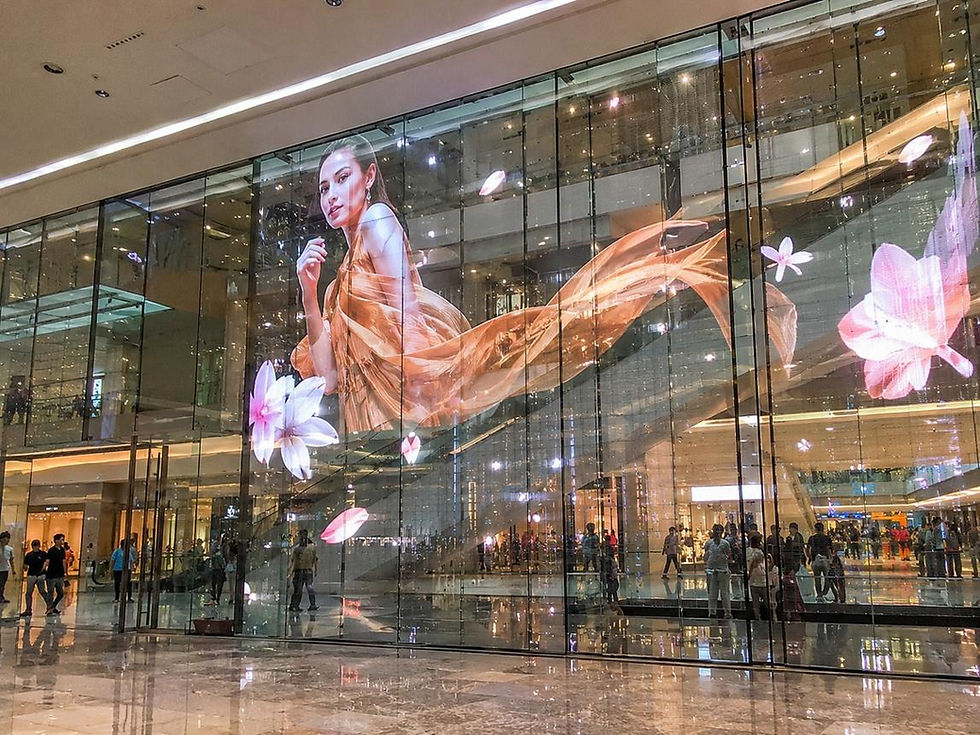
Transparent LED screens
LED floor screens
Ceiling LED screens
Flexible LED displays
Right-angle LED screens
Moving LED structures
These products require more careful content mapping, mechanical design, signal planning, and safety review.
Creative screens can create strong visual impact, but they also increase system complexity. The more creative the screen shape is, the more important the content workflow and control mapping become.
4.6 Fine Pitch LED Display
Fine pitch LED displays are commonly used in control rooms, broadcast studios, corporate halls, XR stages, premium events, and close-viewing applications.
They offer higher resolution at closer viewing distances but require stricter handling, better calibration, and higher investment.
Fine pitch LED displays are suitable when the audience or camera is close to the screen and image detail is critical.
5. Applications
5.1 Concerts and Music Festivals
Concerts are one of the most demanding applications for LED display systems.
The screen must support:
Large-format stage visuals
Live camera magnification
Synchronized lyrics
Visual effects
Audience interaction
Sponsor content
Fast scene switching
Camera-friendly output
High refresh rate, high grayscale, and stable control are essential because the screen is viewed by both the live audience and online viewers through livestreaming, cameras, and smartphones.
5.2 Touring Shows
Touring LED systems need to be transported from city to city. They must be easy to assemble, durable, lightweight, and consistent across repeated installations.
Important requirements include:
Fast cabinet locking
Accurate alignment
Strong mechanical structure
Easy module replacement
Standardized receiving card configuration
Reliable flight cases
Quick screen calibration
Durable connectors
For rental companies, maintenance efficiency can directly affect project profitability. A product that saves installation time and reduces failure rate often has stronger long-term value.
5.3 Stadium Events
Stadium LED display systems must serve large audiences from long viewing distances.
Typical uses include:
Main stage LED wall
Delay screens
Ribbon displays
Scoreboards
Audience interaction screens
Advertising displays
Emergency information screens
Outdoor visibility, structural safety, weather resistance, and system redundancy are especially important in stadium environments.
5.4 Broadcast and Live Streaming
When LED screens are used in broadcast or livestreaming environments, the screen must work well with cameras.
Key requirements include:
High refresh rate
High grayscale depth
Low scan line visibility
Accurate color reproduction
Frame synchronization
Low moiré risk
Stable low-brightness performance
The screen’s first viewer is no longer only the human eye. In many projects, the first viewer is the camera sensor. If the LED screen performs poorly on camera, the final video output may look unprofessional even if the screen looks acceptable on site.
5.5 Brand Launches and Corporate Events
Corporate events use LED displays for presentations, product reveals, keynote backgrounds, immersive brand storytelling, and hybrid event broadcasting.
These projects require:
Sharp image quality
Reliable signal switching
Professional color consistency
Low latency
Flexible screen layout
Integration with cameras and livestreaming systems
A stable LED display system helps reduce technical risk during high-profile events.
5.6 Interactive Audience Engagement
Interactive LED systems can support:
QR code messages
Live comments
Fan walls
Voting results
Birthday greetings
Proposal moments
Social media content
Real-time data visualization
This is where LED systems can turn personal expression into organized public participation. Instead of allowing random audience actions to block the view, the screen can provide a controlled channel for visibility.
For event organizers, this creates new opportunities for audience engagement, sponsorship packages, and value-added services.

6. Advantages
6.1 Large Seamless Visual Surface
LED displays can be built into large seamless screens without LCD bezels. This makes them suitable for concerts, stadiums, touring shows, and immersive environments.
6.2 Modular and Flexible Design
LED cabinets can be assembled into different sizes and shapes. Rental screens can be reconfigured for different venues, while creative LED products can match stage design and architecture.
This modularity gives LED display systems strong flexibility across different event types.
6.3 High Brightness
Outdoor LED screens can remain visible under strong ambient light. Indoor screens can be adjusted to comfortable brightness levels for close viewing and camera recording.
Brightness control is important because excessive brightness can cause visual fatigue, while insufficient brightness can reduce visibility.
6.4 Camera-Friendly Performance
Modern LED display systems can support high refresh rate, high grayscale, low-brightness high-gray performance, and improved scan control.
These features help reduce:
Flicker
Scan lines
Color banding
Poor smartphone recording results
Unstable camera images
For concerts and live broadcasts, camera-friendly performance is becoming one of the most important product selection criteria.
6.5 Real-Time Operation
With video processors, media servers, and control software, LED systems can display live camera feeds, graphics, real-time messages, subtitles, countdowns, emergency notices, and sponsor content.
This makes LED displays suitable for dynamic event environments where content may change during the show.
6.6 Strong Commercial Flexibility
For rental companies and venue operators, LED screens can generate value through:
Concerts
Exhibitions
Sports events
Corporate events
Advertising
Livestreaming
Interactive services
Sponsorship content
The business model can move beyond simple equipment rental toward integrated visual operation.
6.7 Better Audience Inclusion
A well-planned LED display system can help distant viewers see the stage clearly and allow audience interaction without disturbing others.
This is especially important for large-scale venues where visibility, emotional participation, and audience comfort must be balanced.

7. Limitations
7.1 Higher Initial Investment
A professional LED display system requires more than panels. The total budget may include:
LED cabinets
Receiving cards
Sending cards
LED controllers
Video processors
Media servers
Power distribution
Cables
Rigging systems
Flight cases
Calibration tools
Spare parts
Installation labor
Operator training
The lowest cabinet price does not always mean the lowest project cost.
7.2 Technical Complexity
LED display systems require correct integration of hardware, software, signal routing, power, and structure.
Problems may occur if:
Receiving cards are not compatible with modules
Pixel mapping is incorrect
Controller loading capacity is insufficient
Refresh rate is poorly configured
Cabinets are misaligned
Signal cables are damaged
Power distribution is unstable
Software parameters are incorrect
Professional commissioning is essential, especially for large events and camera-facing projects.
7.3 Maintenance Pressure
Rental LED displays face frequent transport and installation. Common maintenance issues include:
Broken LEDs
Loose connectors
Module damage
Receiving card failure
Power supply problems
Cabinet deformation
Color inconsistency
A good maintenance strategy should include spare modules, spare receiving cards, power supplies, cables, and quick diagnostic tools.
7.4 Power Consumption and Heat
Large LED screens consume considerable power and generate heat. System designers must consider:
Power capacity
Cable load
Heat dissipation
Cabinet ventilation
Operating temperature
Energy-saving driver design
Common cathode technology if applicable
Poor thermal design can reduce LED lifetime and increase failure risk.
7.5 Camera Artifacts
If the LED display system is not properly configured, cameras may capture:
Flicker
Scan lines
Moiré patterns
Color banding
Brightness instability
This is a serious issue for concerts, broadcast studios, XR stages, and livestreaming events.
7.6 Content Production Requirements
Large and creative LED screens often require custom content. Curved screens, ring screens, floor screens, and multi-screen stages need accurate content mapping.
Without suitable content, even a high-quality LED screen may not deliver a strong visual experience.
8. Selection Guide
Choosing a live event LED display system should begin with project requirements rather than product appearance.
8.1 Define the Use Case
Before selecting products, clarify:
Is the screen for concert rental, fixed stage, stadium, broadcast, or corporate events?
Is it indoor or outdoor?
What is the viewing distance?
Will the screen be filmed by cameras?
Is the project touring or permanent?
Is interactivity required?
What is the required installation speed?
What is the available power capacity?
What level of redundancy is required?
Who will operate and maintain the system?
Different applications require different system priorities.
8.2 Select Pixel Pitch Based on Viewing Distance
Pixel pitch should match how close the audience is to the screen.
Application | Common Pixel Pitch |
XR studio / close viewing | P0.9–P1.8 |
Indoor stage / conference | P1.8–P2.9 |
Concert rental | P2.6–P4.8 |
Outdoor event | P3.9–P6.9 |
Stadium long-distance viewing | P6–P10 or above |
Smaller pixel pitch provides higher resolution but increases cost, processing load, and maintenance difficulty.
8.3 Check Refresh Rate and Grayscale
For live event and camera applications, review:
Refresh rate
Grayscale depth
Low-brightness performance
Scan mode
Driver IC type
Camera test results
Control system configuration
Common specifications include 3840Hz or 7680Hz refresh rate and 14-bit or 16-bit grayscale. However, real performance depends on the complete system, not only the number listed in the datasheet.
8.4 Confirm Control System Compatibility
The LED control system should match the LED cabinet and project requirements.
Check compatibility among:
Receiving card
Sending card
LED controller
Video processor
Control software
Driver IC
Cabinet resolution
Calibration data
Monitoring system
For rental companies, using standardized control platforms can simplify training and reduce field errors.
8.5 Review Loading Capacity
Loading capacity determines how many pixels the LED controller can support.
Check:
Total pixel capacity
Maximum width
Maximum height
Pixels per output port
Number of Ethernet ports
Frame rate support
Bit depth support
HDR support if required
Backup output options
If the controller is under-sized, the system may not display full resolution or may lose performance.
8.6 Choose the Right Communication Method
For small and medium screens, Ethernet cable transmission may be enough. For large stages, stadiums, or long-distance signal runs, fiber transmission may be necessary.
Consider:
Cable distance
Signal redundancy
Touring durability
Connector quality
Backup topology
Ease of troubleshooting
Stable cabinet communication is critical for live events where failure is visible immediately.
8.7 Evaluate Mechanical Design
For rental LED screens, mechanical design is as important as image quality.
Review:
Cabinet weight
Locking speed
Alignment precision
Corner protection
Curve support
Front and rear service
Rigging compatibility
Stacking support
Flight case design
Cable management
A screen that is difficult to install can increase labor cost and setup risk.
8.8 Consider Reliability and Redundancy
Professional event projects should consider redundancy.
Useful options include:
Signal backup
Power backup
Dual receiving card design
Controller backup
Fiber backup
Hot-swappable components
Real-time monitoring
Fault alarm system
For mission-critical events, redundancy is not an optional feature. It is part of risk control.
8.9 Plan Maintenance and Spare Parts
Procurement teams should ask suppliers about:
Spare module ratio
Spare receiving cards
Spare power supplies
Spare cables
Repair process
Calibration method
Module replacement time
Local technical support
Warranty terms
Firmware and software support
Good maintenance planning can reduce downtime and protect long-term investment.
8.10 Evaluate Total Cost of Ownership
Do not compare only cabinet prices.
The total cost includes:
Purchase cost
Shipping
Installation
Control system
Video processing
Rigging
Power distribution
Maintenance
Spare parts
Labor
Storage
Training
Future upgrades
For B2B buyers, a stable system with lower failure rate may provide better value than a cheaper system with frequent service issues.
9. Brands
The LED display market includes display manufacturers, control system brands, video processor suppliers, and media server providers. Brand selection should be based on technical fit, service capability, and project needs.
9.1 LED Display Manufacturers
Common LED display manufacturers in global and Chinese markets include:
Leyard
Unilumin
Absen
ROE Visual
INFiLED
LianTronics
AOTO
Ledman
Sansi
Gloshine
These manufacturers may focus on different segments, such as rental LED display, fine pitch LED, outdoor advertising, broadcast LED, or creative LED solutions.
9.2 LED Control System Brands
Common LED control system brands include:
NovaStar
Colorlight
Linsn
Huidu
Brompton Technology
Megapixel VR
Mooncell
NovaStar, Colorlight, and Linsn are widely used in many commercial and rental LED projects. Brompton Technology and Megapixel VR are often used in high-end camera, broadcast, and virtual production workflows.
9.3 Video Processor and Media Server Brands
For complex live events, video processors and media servers play a key role.
Commonly used product categories include:
LED video processors
Seamless switchers
Multi-screen processors
Broadcast switchers
Media servers
XR rendering systems
Selection should consider input formats, output capacity, latency, synchronization, color workflow, operator familiarity, and service support.
9.4 How to Compare Brands Objectively
When evaluating brands, review:
Technical documentation
Product certifications
Real project references
Control system compatibility
Local support
Spare parts availability
Warranty policy
Firmware stability
Calibration support
Training resources
Long-term supply continuity
A recognized brand can reduce project risk, but final performance still depends on system design, installation quality, and on-site commissioning.
10. Conclusion
A live event LED display system is no longer just a large background screen. It is a complete visual infrastructure that connects LED cabinets, receiving cards, sending cards, LED controllers, video processors, control software, signal transmission, power distribution, content workflow, and audience experience.
For engineers, the priority is signal integrity, cabinet communication, loading capacity, control compatibility, refresh performance, and system stability.
For system integrators, the priority is reliable design, fast installation, maintenance access, redundancy, and smooth operation.
For procurement teams and B2B buyers, the priority is total cost of ownership, supplier support, product lifecycle, spare parts, and long-term value.
For event organizers, the priority is even broader: the LED display should help audiences see, participate, and remember the event without disturbing the experience of others.
The future of the LED display industry is not only about making screens larger or brighter. It is about making them more intelligent, more camera-friendly, more interactive, easier to operate, and more respectful of the audience experience.
A well-designed LED display system allows important moments to be seen by everyone — without blocking anyone.
Final CTA
Got more questions for your LED screen project? Try our AI chatbot for instant answers. Leave your email to get our free LED engineering handbook.


Comments