
What Is a Cloud Monitoring Platform for LED Displays? A Complete Guide for Remote Monitoring and After-Sales Service
- Tse Cherie
- May 19
- 10 min read

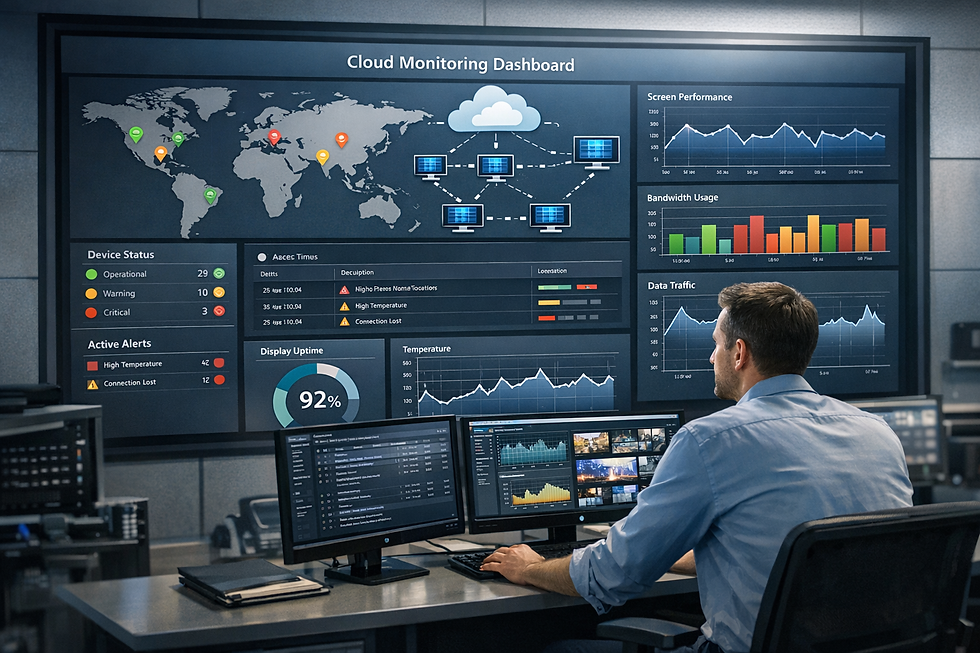
A cloud monitoring platform for LED displays is a remote management system that helps operators, integrators, and service teams monitor screen status, diagnose faults, track device history, and improve after-sales efficiency across distributed LED display networks. In practical terms, it extends the LED control system beyond the local control room by connecting controllers, players, receiving cards, and maintenance workflows to a centralized cloud interface.
As LED display projects grow in scale, geography, and service complexity, traditional maintenance methods become increasingly inefficient. Fault handling based only on user complaints, phone calls, and on-site troubleshooting often leads to delayed response times, high labor costs, and inconsistent service quality. A cloud monitoring platform addresses these issues by making device visibility, fault alerts, configuration records, and maintenance data accessible online. For engineering companies, digital signage operators, and enterprise service teams, this kind of platform is becoming an important part of the full LED system lifecycle.
System Overview
A cloud monitoring platform for LED displays is a software-based management layer built on top of the hardware control chain. In a standard LED display system, content is transmitted from a control computer, media player, or cloud publishing platform to sending cards, controllers, and receiving cards, which then drive the LED cabinets. A cloud monitoring platform does not replace this control path. Instead, it adds a supervisory layer that collects operational data from devices and presents it through a centralized dashboard.
From a system architecture perspective, the platform usually connects four elements:
Field devices, such as LED controllers, players, receiving cards, sensors, and network-connected peripherals
Communication infrastructure, including Ethernet, 4G/5G, Wi-Fi, VPN, or private network access
Cloud platform services, which process status data, generate alerts, store logs, and manage user accounts
Service interfaces, such as dashboards, maintenance portals, mobile apps, and ticketing workflows
This makes the platform especially valuable for projects where screens are installed across different buildings, cities, or regions. Instead of treating each display as an isolated installation, the operator can treat the entire deployment as a manageable device network.
In industry practice, cloud monitoring is often confused with cloud publishing. The two are related but not identical. A cloud publishing platform focuses on media scheduling and content distribution to LED screens. A cloud monitoring platform focuses on screen health, controller status, fault diagnostics, configuration records, and maintenance support. Some advanced ecosystems combine both functions, but their operational priorities are different.
System Role & Functional Positioning
Within the LED display ecosystem, a cloud monitoring platform serves as the remote operations and maintenance layer. Its role is not to directly render video content like a video processor, nor to transmit control signals like a sending card, nor to decode data at the cabinet level like a receiving card. Instead, it provides visibility and management over the status of those devices.
Its functional positioning can be understood through the following roles:
1. Remote Maintenance Hub
For service teams, the platform acts as a centralized maintenance console. Engineers can check whether a display is online, whether a controller has reported an abnormal state, whether a receiving card has gone offline, or whether brightness, temperature, or power-related anomalies have appeared.
2. Fault Alert and Diagnostic Layer
Instead of waiting for the end user to notice a problem, the system can actively detect changes in display health. This is particularly important in commercial LED signage, traffic guidance screens, and other applications where uptime is tied to service-level expectations.
3.Asset and Lifecycle Management Tool
Beyond live monitoring, many platforms also support configuration backup, warranty traceability, spare part tracking, and maintenance history. This shifts after-sales support from reactive troubleshooting to lifecycle management.
4. Bridge Between Integrators and Operators
In many LED projects, the display owner is not the same party as the technical maintenance provider. A cloud monitoring platform creates a shared interface where integrators, operators, and authorized service personnel can coordinate around the same device data, reducing communication delays and improving accountability.
In short, the cloud monitoring platform sits beside the LED control system as an operational intelligence layer. It supports decision-making, maintenance planning, and service quality control rather than direct signal output.
Working Principles
The working principles of a cloud monitoring platform can be understood as a data collection and remote service workflow layered onto the existing LED control system.
1. Device Connectivity
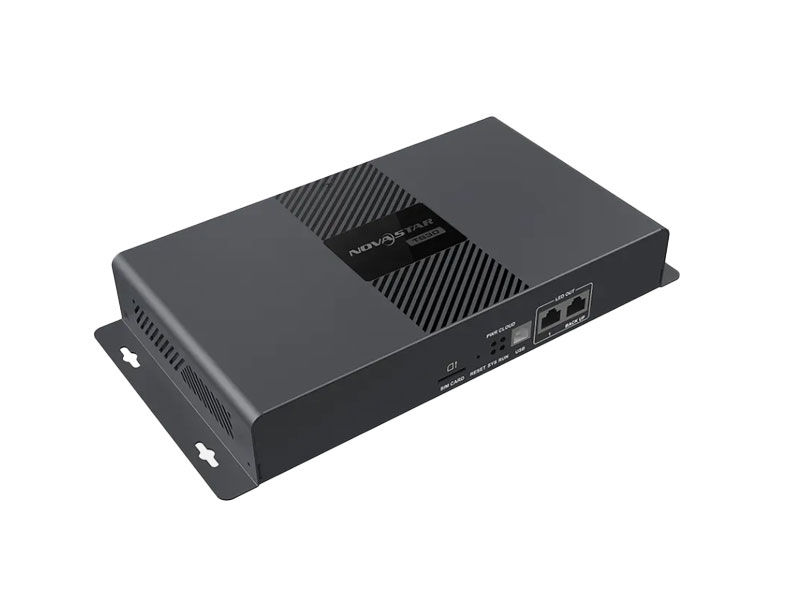
First, the LED player, controller, or other compatible control device must be connected to the internet. Depending on project conditions, this may be achieved through:
Wired Ethernet
Wi-Fi
4G or 5G cellular access
Private network or VPN deployment
Without stable network access, cloud monitoring cannot function in real time.
2. Device Registration and Binding
Once online, the devices are registered and linked to a cloud account, project account, or organizational workspace. This creates a digital identity for each screen or controller in the monitoring system. In large deployments, devices may also be grouped by location, customer, region, or project type.
3. Data Synchronization
After registration, the platform continuously or periodically synchronizes key technical data, which may include:
Screen topology
Cabinet mapping
Resolution and configuration details
Sending card and receiving card status
Online/offline state
Operating logs
Error reports
Firmware or software version information
Environmental or power-related data, if supported
This is where compatibility matters. The cloud platform can only collect what the hardware and firmware are designed to expose.
4.Alerting and Analysis
If the platform detects abnormal conditions, it can generate fault alerts, warnings, or maintenance notifications. Depending on platform capability, this may include:
Offline device alerts
Receiving card communication loss
Parameter mismatch warnings
Backup configuration reminders
Temperature or brightness anomalies
Repeated fault history flags
This function is especially useful for distributed LED networks, where manual inspection of each site is impractical.
5. Maintenance Workflow Integration
More advanced platforms go beyond monitoring by integrating service actions. Engineers may be able to:
Review historical logs
Restore backup configurations
Check spare part records
Track warranty status
Submit or manage service tickets
Guide local technicians through remote diagnostics
In other words, the cloud monitoring platform closes the loop between fault discovery and maintenance execution.
Product Classification
Cloud monitoring platforms for LED displays can generally be divided into three categories based on functional depth and deployment needs.
1. Standard Cloud Monitoring Platforms
These platforms focus on basic operational visibility and are suitable for small to medium-sized screen networks.
Typical features include:
Online/offline status monitoring
Basic fault alerts
Device list management
Historical logs
Simple dashboard views
This type is often enough for project-level maintenance where the number of screens is limited and troubleshooting workflows are relatively straightforward.
2. Enterprise-Grade Monitoring Platforms
These platforms are designed for professional maintenance teams and larger service organizations that manage many screens across different customers or regions.
Typical features include:
Advanced diagnostic records
Backup configuration management
Spare parts tracking
Warranty traceability
Multi-role account permissions
Large-screen operation dashboards
Service workflow integration
This category is more suitable when after-sales service is part of a formal SLA process and documentation quality matters.
3.Integrated Smart Platforms
Integrated platforms combine cloud publishing, monitoring, and maintenance capabilities in one ecosystem. Instead of using separate tools for content scheduling and device diagnosis, operators can manage the full device lifecycle within one platform.
Typical features include:
Content publishing and scheduling
Device monitoring
Remote troubleshooting
Unified device and project management
Multi-site operational analytics
This model is attractive for advertising networks, retail rollouts, and chain-store deployments where content operations and technical maintenance are tightly connected.
Applications
The application value of a cloud monitoring platform becomes most visible when screens are distributed, uptime is important, and on-site maintenance is costly.
1. LED Engineering Companies
Engineering firms managing indoor and outdoor projects across malls, campuses, transportation hubs, or sports venues can use cloud monitoring to reduce reliance on manual inspection. A centralized platform allows them to detect abnormal cabinet communication, receiving card issues, or controller failures before customers escalate the problem.
2. City-Wide Public Information Networks
Traffic guidance boards, public bulletin screens, and civic messaging displays often operate under strict service expectations. In these environments, fault alerts and response tracking help operators meet uptime targets and organize repair work more efficiently.
3. Digital Out-of-Home Advertising Networks
Advertising agencies operating LED billboards, mobile LED trailers, or regional media networks need both operational visibility and service consistency. Remote diagnostics reduce downtime, while platform data can help maintenance teams identify recurring technical problems across multiple sites.
4. Government, Military, and Enterprise Projects
For high-accountability projects, maintenance records, fault logs, and warranty traceability are often as important as the screen itself. A cloud monitoring platform provides structured data that supports formal service documentation and controlled access management.
5.Retail Chain and Franchise Networks
Retail headquarters can use cloud-based tools to monitor menu boards, shelf displays, promotional LED screens, or store-level digital signage. In these cases, batch monitoring and remote troubleshooting can significantly reduce the cost of supporting hundreds or thousands of endpoints.
6. Highway and Transportation Signage
Roadside LED signage often requires fast issue detection due to its public safety function. A monitoring platform can help operators identify brightness abnormalities, communication failures, or environmental issues more quickly than traditional complaint-based maintenance methods.
Advantages
A cloud monitoring platform offers several practical advantages for LED display operations and after-sales service.
1.Visualized Topology and Real-Time Monitoring
Visual dashboards make it easier to understand the structure and health of the display network. Instead of reading isolated status codes, operators can see how cabinets, controllers, and receiving cards relate to one another.
2. Faster Fault Response
By detecting issues remotely and early, service teams can respond before minor abnormalities become visible screen failures. This improves service efficiency and may reduce downtime.
3. Cloud Backup of Configurations
Configuration backup is one of the most useful features in real projects. If a controller is replaced or a parameter set is lost, stored settings can simplify recovery and reduce commissioning time.
4. Historical Logs for Diagnosis and Warranty
Historical data supports more accurate troubleshooting. It also helps determine whether failures are random, recurring, or related to specific devices, firmware versions, or operating conditions.
5. Spare Parts and Maintenance Workflow Management
For companies handling many projects, spare part records and maintenance workflows improve internal coordination. They also make service work more traceable and easier to standardize.
6. Better Service Reputation
Although a cloud monitoring platform is primarily a technical tool, it also supports customer satisfaction. Faster diagnosis, clearer maintenance records, and more proactive service can improve trust between integrators and end users.
Limitations
Despite its benefits, cloud monitoring is not suitable for every project in the same way. Several limitations should be considered during planning.
1. Dependence on Network Availability
Real-time monitoring requires stable internet access. Screens located in tunnels, underground spaces, remote areas, or unstable network environments may experience delayed synchronization or intermittent visibility.
2.Hardware Compatibility Constraints
Not all LED control systems support cloud integration equally. Legacy controllers, unbranded receiving cards, or highly customized systems may not expose enough data to the platform.
3. Brand-Specific Ecosystems
Some advanced functions are tightly tied to specific manufacturers. Features such as automatic backup, remote scripts, or detailed fault diagnostics may work best only within a particular brand ecosystem.
4.Update and Version Management
The platform, controller firmware, control software, and associated system tools need to remain compatible. If updates are neglected, data synchronization issues or function limitations may appear.
5. Additional Cost Factors
Cloud storage, advanced user roles, API access, or enterprise dashboards may involve licensing or subscription fees. For some projects, the service cost should be evaluated alongside the hardware budget.
6. Data Security and Access Control
For large deployments, especially across regions or with third-party maintenance contractors, account permissions, data ownership, and privacy policies need to be managed carefully.
Selection Guide
Choosing the right cloud monitoring platform depends on the structure of the LED project, the maintenance model, and the level of control system compatibility.
1. Define the Use Case First
Different projects require different monitoring depth:
Project-level maintenance: basic online status, logs, and alerts may be enough
SLA-driven service networks: warranty records, spare part tracking, and workflow management become more important
Advertising or retail networks: integrated publishing and monitoring may offer better operational efficiency
2. Check Hardware Compatibility
Before selecting a platform, confirm compatibility with:
LED controllers
Sending cards
Receiving cards
Control software
Existing network architecture
Compatibility is one of the most critical factors. A powerful platform provides limited value if the installed hardware cannot support reliable data collection.
3. Evaluate Monitoring Granularity
Not all platforms monitor at the same level. Some only show whether a screen is online. Others can display cabinet topology, receiving card anomalies, parameter mismatches, and maintenance logs. The right choice depends on how detailed your service process needs to be.
4. Consider Scale and Device Loading
For large networks, check whether the platform can handle:
Multi-site deployments
Large numbers of screens
Multi-user collaboration
Regional account structures
Dashboard performance under high device counts
Why it matters: The platform must match the real scale of your network, not just its feature list.
5.Review Maintenance Features
A procurement decision should also consider practical service functions, such as:
Configuration backup and restore
Fault history review
Spare part tracking
Warranty traceability
Remote assistance tools
Training materials or built-in support resources
6. Assess Reliability and Security
For enterprise-grade deployment, ask whether the platform supports permission management, audit trails, secure access controls, and stable server performance. These factors become increasingly important in government, transportation, and enterprise environments.
7.Match the Platform to the Control Strategy
If the project uses an integrated LED control system from one major brand, it may be more efficient to stay within that ecosystem. If the network includes mixed hardware brands, confirm whether the platform can support cross-brand operation or whether separate monitoring frameworks will be required.
Brands
The LED industry includes several monitoring-related platforms and manufacturer ecosystems. The right choice often depends less on brand popularity and more on actual compatibility and service requirements.

1. NovaStar Screen Manager
NovaStar’s Screen Manager, also known as 屏老板, is widely recognized as a mature example of a cloud monitoring solution for LED displays. It is particularly relevant in projects already using NovaStar control products and software tools, where compatibility with configuration workflows and receiving card management is a major advantage.
2. Linsn Monitoring
Linsn-related monitoring solutions are typically considered in projects already based on the Linsn control ecosystem. Their suitability depends on hardware generation, supported functions, and deployment scale.
3. Colorlight iCare
Colorlight offers monitoring-oriented tools for users within its own control platform environment. For buyers already using Colorlight sending cards, receiving cards, or control software, ecosystem continuity may be an important factor.
4. Kystar Cloud Monitor
Kystar provides cloud-related monitoring capabilities in some solution scenarios, particularly where users prefer a platform aligned with Kystar control products.
5. User-Defined or Enterprise Solutions
Some large operators or integrators build custom monitoring frameworks based on project-specific APIs, private servers, or enterprise IT systems. This route may offer flexibility, but it also increases implementation and maintenance complexity.
The most practical brand selection principle is simple: choose the platform that matches your LED control system, service workflow, and support expectations—not just the platform with the longest feature list.
Conclusion
A cloud monitoring platform for LED displays is becoming an important operational tool for modern LED projects, especially where screens are geographically distributed and after-sales expectations are high. It helps transform maintenance from a reactive process based on complaints into a structured workflow built on visibility, alerts, logs, and service records.
For engineers and system integrators, the value lies in faster diagnostics, clearer device management, and more efficient service delivery. For operators and procurement teams, the value lies in reduced downtime, stronger accountability, and better long-term support planning. The right platform should be selected not only by feature count, but by how well it fits the installed LED control system, hardware compatibility, maintenance model, and deployment scale.
As the LED display industry continues moving toward more connected, data-driven operations, cloud monitoring platforms will likely play an increasingly central role in lifecycle management, remote support, and network-wide service standardization.


Comments